The show floor at MODEX 2026 didn’t feel like a place where people were exploring possibilities. It felt like a place where decisions were already underway.
More than 50,000 attendees moved across three halls and over 1,000 exhibitors, but the conversations were strikingly consistent. Warehouse leaders weren’t asking whether to automate. They were talking about how to keep picks from falling behind, how to prevent pack from getting buried mid-shift, and how to scale without rebuilding their entire operation.
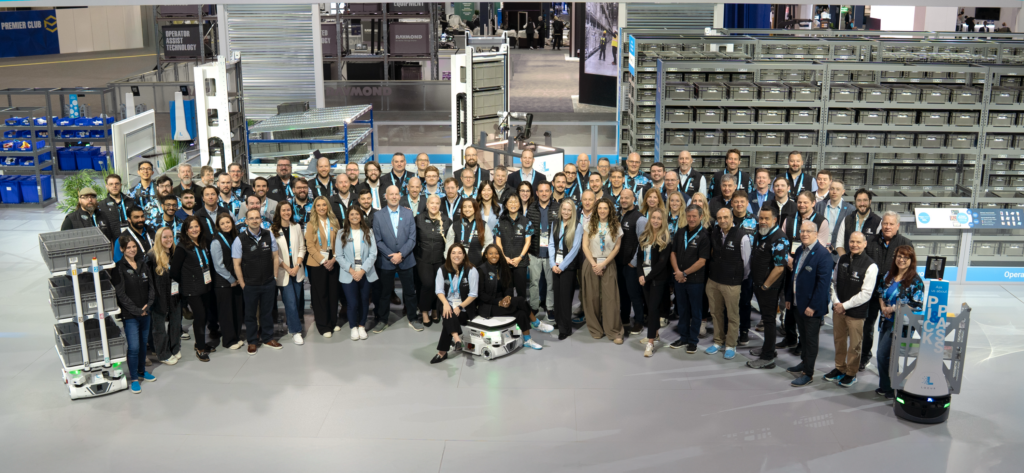
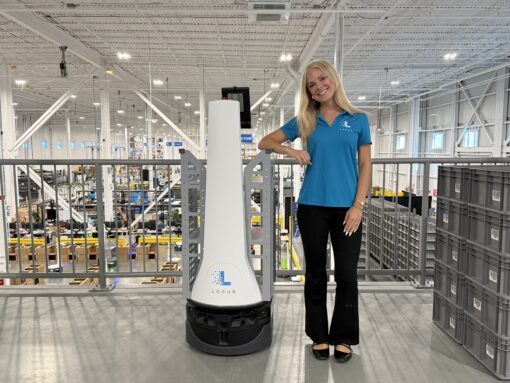
From where I stood in the Locus Robotics’ booth, listening to those conversations and watching how people engaged with the technology on display, including systems like Locus Array, five themes kept surfacing.
AI Moves onto the Warehouse Floor
AI was everywhere, but not in the way it’s often discussed. The booths that drew the most attention weren’t the ones talking about future capabilities. They were the ones showing work getting done.
What warehouse operators and executives responded to was simple:
- Systems that reprioritize work when orders spike
- Routing that adjusts when aisles get congested
- Workflows that keep moving when labor plans change mid-shift
Increasingly, that also includes forecasting with systems like LocusHub anticipating demand shifts and adjusting work before issues start to build.
There’s a growing expectation that AI should go beyond reporting on what’s happening and help teams act on it, turning real-time data into decisions that keep work moving. If it can’t do that when volume jumps or labor drops, it’s not part of the decision.
Warehouse Automation Becomes the Starting Point
Across the show floor, automation was expected, and the conversation has moved beyond whether to adopt it.
Roughly 80 to 90 percent of exhibitors had some form of warehouse automation on display, and the questions I heard reflected a shift. Instead of “Should I automate my warehouse?”, attendees asked:
- Where do we start without slowing down current operations?
- How fast can we expand once we see results?
- What does the ramp actually look like in the first 90 days?
What stood out was the move beyond point solutions. Buyers are looking at how picking, replenishment, packing, and movement connect, and not just how each piece performs on its own. The focus is on systems that can expand across workflows without creating new bottlenecks.
At the same time, priorities are becoming more defined. Teams are looking closely at:
- How quickly a system can be deployed
- How easily it integrates into existing operations
- Whether it can scale across multiple workflows over time
- What proof exists from real-world deployments
There’s also more scrutiny than in years past. Buyers are asking tougher questions and showing more skepticism toward solutions that can’t point to production environments. If it hasn’t been proven on an active warehouse floor, it’s harder to take it seriously.
Warehouse Orchestration Takes Center Stage
One of the clearest shifts at MODEX was where attention is moving next.
More attention is going to how robots, people, and workflows stay aligned when operations tighten up.
That shift is also driving more interest in end-to-end systems that span the full operation, from picking and replenishment through packing and movement, rather than solutions that address a single task in isolation.
The strongest conversations centered on warehouse orchestration that:
- Coordinates multiple workflows in real time
- Balances work between people and robots
- Keeps inventory, tasks, and movement aligned
Disconnected systems are increasingly seen as the root of slowdowns. When pick paths collide, when pack falls behind, and when the dock starts backing up, the issue is rarely a single piece of equipment. It’s the lack of coordination across the system.
That’s where buyers are focusing. Not on adding more technology or hardware, but on making sure everything moves as one.
Proof Matters More Than Positioning
The busiest booths weren’t always the largest. They were the ones where people could see operations in motion.
Live demos drew consistent crowds; customer sessions were standing room only; and there was less patience for conceptual positioning and more focus on what’s actually working in production.
The metrics that kept coming up were familiar across conversations:
- 2 to 3 times improvements in pick rates
- Fewer labor hours required to hit the same volume
- Faster cycle times from order to ship
But the conversation didn’t stop at performance. Buyers are pushing deeper, looking for proof that those results hold up beyond a single deployment.
They want to know:
- Where is this running today?
- How long did it take to go live?
- What changed on the floor after implementation?
- What happens when volume increases or conditions shift?
There’s also a clear focus on scale. It’s not enough to show that something works in one environment. Teams are asking whether systems can expand across sites, handle higher volumes, and continue performing as operations grow.
Solutions that can point to real deployments — and show how they scale in production — are the ones that are getting the most attention.
Operational Understanding Drives Decisions
One of the more telling shifts at MODEX had less to do with the technology itself and more to do with who buyers trust to deliver it.
There was plenty of innovation on display, but the conversations kept coming back to operational understanding. Not just how a robot performs in isolation, but how a system holds up in a real warehouse, where volume changes, exceptions happen, and things don’t always go according to plan.
That’s showing up in how solutions are evaluated:
- How well they handle real-world complexity, not just controlled scenarios
- How quickly teams can adapt when order profiles or labor availability shift
- How easily operations can scale without introducing new friction
There’s also a noticeable increase in collaboration across the ecosystem. More providers are working together to bring robotics, software, and operational expertise into a single solution, rather than presenting standalone capabilities.
System integrators and experienced partners are playing a larger role in that process. They’re often the ones connecting the pieces, making sure systems work together, and translating technology into something that actually runs on a live warehouse floor.
As a result, credibility is being measured differently. It’s less about engineering alone and more about proven experience in supply chain and warehouse operations. Buyers are paying close attention to who understands what happens when a shift starts to slip, and who can help keep things moving when it does.
What This Means Moving Forward
MODEX didn’t introduce new questions. It clarified which ones matter most.
Warehouse leaders are under pressure to keep operations steady even when volume, labor, and demand shift day to day, so their focus is on maintaining flow, and not just adding capacity.
That’s why attention is moving toward systems that can hold up under real conditions. Systems that keep work moving when picks start to slip, pack gets backed up, and plans change mid-shift. The ones that can scale across sites, adapt in real time, and coordinate work across the entire operation are getting the most serious consideration.
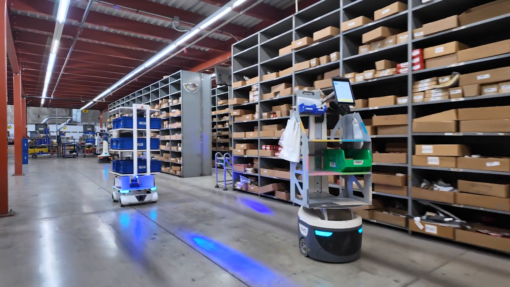
It’s also why there’s growing interest in approaches like the Robots-to-Goods model, where work happens directly in the aisle and closer to inventory. Not as a concept, but as a practical way to reduce dependency on perfect conditions and keep execution on track as volume and complexity increase.
For teams evaluating what comes next, the takeaway is straightforward. Look for systems that have been proven in real environments, can scale beyond a single deployment, and continue to perform when the floor gets busy.
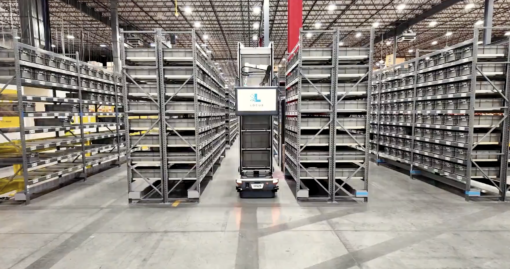
If you’re exploring what this looks like in practice, you can learn more about how Locus Array supports fully autonomous fulfillment or see warehouse automation in action through the Automation Advantage tour.
About the Author
Vered Tomlak is an accomplished marketing leader with deep expertise in supply chain and warehouse automation. As Vice President of Demand Generation at Locus Robotics, she leads demand generation, customer engagement, and partner marketing efforts — driving integrated campaigns that guide prospects through the buyer journey while strengthening loyalty among customers and partners. Before joining Locus, Vered led North American marketing at Vecna Robotics, where she helped shape the company’s presence in a rapidly evolving automation market. She is an active member of the Material Handling Industry’s (MHI) Robotics Group and Marketing Professional Group, contributing to global collaboration and research on emerging industry trends. Vered holds an MBA from the University of Massachusetts–Boston with a concentration in strategic planning and marketing. Her background spans go-to-market strategy, brand development, and cross-functional program execution


 Article