When demand volatility can change overnight, how can you adapt, plan, and ensure productive operations?
In a sector as changeable as Footwear and Apparel, disruption and variability are becoming more frequent:
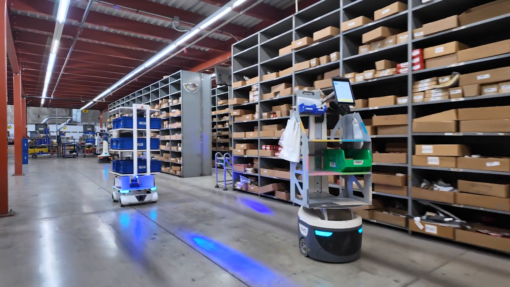
- Assortments continue to expand across sizes, colors, and seasonal collections; increasing travel times and complicating pick paths,
- Order profiles shift constantly between single-item eCommerce picks and bulk retail replenishment, disrupting flow and causing bottlenecks,
At the same time, peak demand spikes are harder to predict, driven by social influence and promotions, as well as traditional seasonality.
On the floor, the impact is immediate.
Pick paths stretch across the building. Pack stations fall behind when the order mix changes. Labor plans can change before the next shift, and training new hires absorbs time that teams simply don’t have.
And with the eCommerce apparel market estimated to reach USD%1.62 trillion by end of 2035 (from USD$747.6 billion in 2025), volumes and variability are only expected to increase further.
Today, Apparel and Footwear facilities must plan to adapt operating conditions to keep pace. Yet current infrastructure can present complexity.
The Traditional Fulfillment Model Challenge
For many operations, the fulfillment infrastructure that’s in place today was designed for a different environment. Specifically, one where demand was more stable, SKU ranges were narrower, and workflows could be planned with relative certainty.
That landscape has changed.
Fixed systems, by design, operate within predefined workflows and capacity limits. They perform well when volume and order profiles behave as expected. But when demand shifts (and in Footwear and Apparel, it regularly does), those same systems can become restrictive. Capacity cannot easily be adjusted. Workflows can’t rebalance without intervention. Bottlenecks emerge quickly.
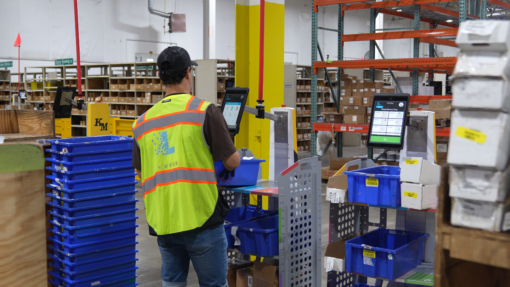
Labor-heavy operations face a different version of the same problem. When volume spikes, teams scale headcount. When labor availability drops, throughput drops with it. Either way, performance is tied to conditions that are increasingly difficult to control.
The result is reactive operation that can be quickly overwhelmed by variability.
So, what’s the answer?
A ‘New Season’ for Fulfillment Operations
Moving toward fulfillment infrastructure that adjusts as conditions change — without requiring reconfiguration or redesign — is one way that Apparel and Footwear operations are adjusting.
For many COOs and Operations leaders, the question is longer whether to automate, but what kind of automation infrastructure can sustain performance when conditions shift.
Adaptive automation offers a solution, allowing facilities to:
- Decouple throughput from labor availability. So, if half a shift calls out, the operation can still move volume.
- Support multiple workflows simultaneously, across eCommerce, wholesale replenishment, and returns processing, mitigating bottlenecks, overwhelm and complexity.
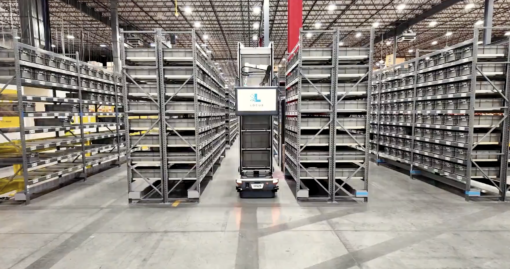
- Introduce capacity agility within existing or dense environments, without locking operations into fixed limits, and without disruption or large-scale redesign.
- And ultimately, enable consistent performance under changing conditions.
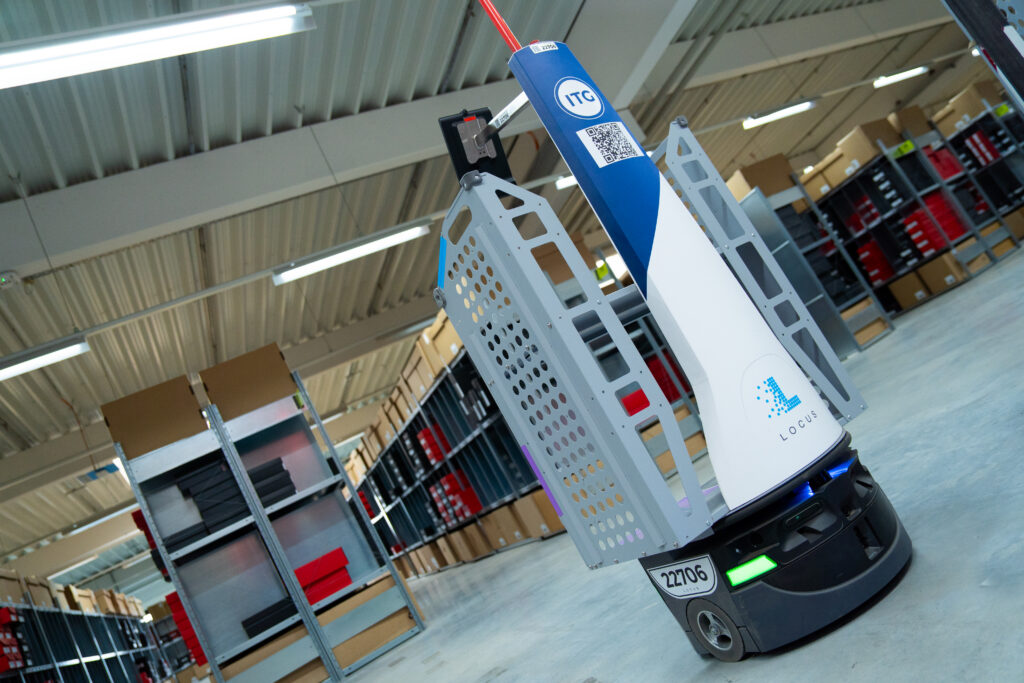
As an example in practice: 3PL leader ITG supports a premium Apparel and Footwear brand. Operating in a high-density, constrained facility; demand can surge rapidly during peak events. Within their first year with adaptive automation, the site processed over 140,000 orders and achieved more than 2 million units picked; absorbing demand spikes without adding fixed capacity.
Planning for Variability, Not Reacting to It
In a landscape of uncertainty, one thing is sure: Footwear and Apparel fulfillment is only becoming more complex. SKU counts will continue to grow. Order profiles will remain unpredictable. Peaks will come faster and hit harder.
Operations that plan to absorb variability, rather than react to it, will be the ones able to perform consistently.
That requires a different approach to fulfillment infrastructure — one designed to adapt in real-time to keep work moving when conditions change, to maintain throughput, and ensure operational control, even when the plan no longer applies.
Ready to see more? Explore how automation built for uncertainty can transform apparel fulfillment.


 Article