Kimball Midwest improved warehouse putaway productivity by more than 100% by using Locus Robotics to support putaway and picking in the same workflow. The industrial distributor increased inventory flow, accelerated onboarding, and scaled operations without redesigning its facilities — all while maintaining 99.9% same-day shipping.
"We've been on a trajectory of doubling in size every five years. Those doubles get harder and harder."
That's how Steve Good, Director of Operations at Kimball Midwest, describes the challenge of scaling a fast-growing distribution operation.
As one of North America's leading MRO distributors, Kimball Midwest has built its reputation on customer service. The company ships 99.9% of orders received by 4 p.m. on the same day, which is a performance standard that becomes increasingly difficult to maintain as inventory volumes grow, customer expectations rise, and operations become more complex.
At the same time, like many warehouse operators, Kimball Midwest was facing labor challenges while continuing to expand. The company relied heavily on temporary labor, spent significant time onboarding new associates, and asked managers to devote increasing amounts of time to hiring and training.
As Good described it:
"You have two people doing the work of less than one person."
Experienced associates were training new associates. Productivity suffered. At the same time, the company remained committed to maintaining its service levels while continuing to grow toward its next phase of expansion.
Simply adding more people was not a long-term solution.
The company needed a more scalable approach.
Learn how Locus Robotics boosted picking accuracy to 99.85% for Dental City.
Why does warehouse putaway become harder as distribution operations grow?
Warehouse putaway becomes harder as distribution operations grow because more inventory must move from receiving into storage and back into active pick locations without slowing fulfillment.
When warehouse leaders think about operational performance, picking usually dominates the conversation because it is directly tied to order fulfillment.
But Kimball Midwest discovered that as the business grew, inventory movement became just as important.
As inventory volumes increased, so did the amount of replenishment work required to keep forward pick locations stocked. Inventory needed to move quickly from receiving into storage and then back into picking locations as demand shifted throughout the day. If that flow slowed down, fulfillment performance eventually felt the impact.
When Kimball Midwest began evaluating warehouse automation, the company focused on three primary objectives: same-day shipping, order accuracy, and fill rates.
What stood out about Locus Robotics was not simply the picking solution. It was the ability to support putaway alongside picking within the same workflow.
"The fact that they added put away and the interleaving of work of putaway and picking was very, very attractive to us," said Good.
As the deployment expanded, that ability to move between putaway and picking became one of the operational advantages Kimball Midwest valued most.
Returned inventory still needs to be put away. Read this blog to learn how returns impact inventory flow and warehouse costs.
How can combining putaway and picking improve warehouse flexibility?
Combining putaway and picking improves warehouse flexibility by allowing the same workforce to shift between inventory movement and order fulfillment as demand changes.
Traditional warehouse workflows often separate picking and putaway into distinct functions. Associates are assigned to one task or the other, and managers must continuously balance labor across both activities as demand changes throughout the day. Kimball Midwest wanted greater flexibility.
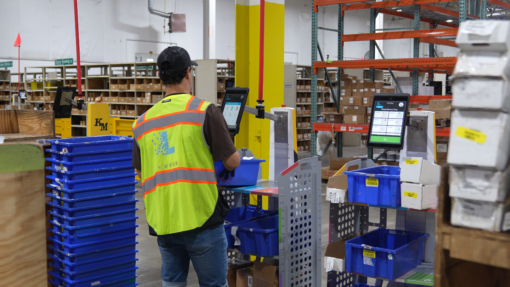
With Locus Robotics, associates were able to move between putaway and picking based on operational priorities.
"The associates before were either picking, or they were doing putaway. Right now, they do both," said Good.
That flexibility allowed managers to allocate labor where it was needed most during slower order periods when teams could focus on replenishment and putaway activities. As order volume increased closer to shipping cutoffs, the same workforce could shift toward fulfillment, creating a more adaptable operation that could respond to changing workload demands without requiring separate labor pools for each task.
The impact extended beyond daily resource planning when Kimball Midwest also found it could onboard associates significantly faster. Instead of spending days or weeks training workers on warehouse processes, managers could get employees productive in a fraction of the time.
"We're talking minutes and hours instead of days and weeks," said Good.
That faster onboarding gave managers greater confidence in their ability to respond to labor fluctuations and changing operational requirements.
Can warehouses improve putaway without redesigning the facility?
Warehouses can improve putaway without redesigning the facility when automation works within existing shelving, pallet rack, and storage locations.
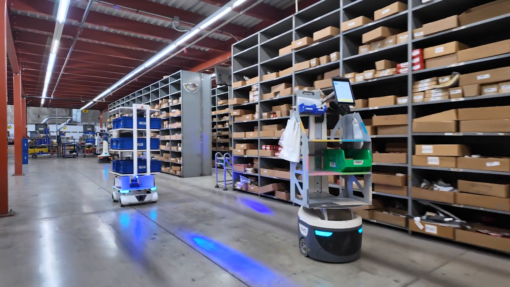
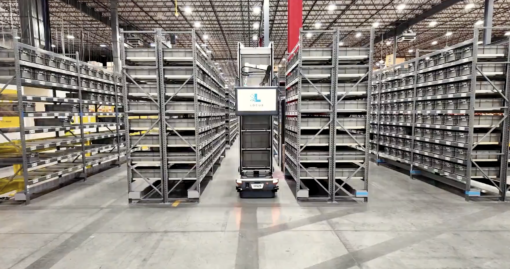
Another reason Kimball Midwest selected Locus Robotics was the ability to introduce automation without disrupting existing operations. Existing shelving, pallet rack, and storage locations remained in place, allowing associates to continue working within a familiar environment rather than relearning an entirely new layout.
"We were able to leave the shelving in place,” said Good. “We were able to leave the pallet rack in place. Basically, we were able to leave our facilities as they were."
That simplicity helped accelerate adoption and reduced implementation risk. In fact, Good described the deployment as "the easiest go-live we've ever done."
Following the success of the initial deployment, Kimball Midwest expanded the solution to additional distribution centers.
How much did Kimball Midwest improve putaway productivity with Locus Robotics?
Kimball Midwest improved putaway productivity by more than 100% after implementing Locus Robotics to support both putaway and picking.
Warehouse automation conversations often focus on picking productivity, and Kimball Midwest saw those gains as well.
Picking productivity improved by approximately 45%, but what surprised the company was the magnitude of the improvement in putaway. As Good explained, "Our putaway metrics were up over 100% for us." In some facilities, putaway productivity improved from roughly 30 lines per hour to more than 90 lines per hour.
Even more importantly, those improvements occurred while associates were supporting both putaway and picking activities throughout the day.
Managers could shift labor between putaway and picking throughout the day without losing momentum in either workflow.
Inventory moved through the warehouse more consistently, replenishment stayed ahead of demand, and teams were better positioned to handle increasing order volume.
For an industrial distributor handling heavy products such as fasteners, bolts, screws, and maintenance supplies, the benefits extended beyond performance metrics.
Learn how Brother Industrial improved warehouse efficiency with Locus Robotics.
Associates no longer spent entire shifts pushing heavily loaded carts through the warehouse.
"We're taking the hardest part of the job for them, which is pushing and pulling and lifting, and taking that out of the equation," said Good.
Operational Area | Before Locus Robotics | After Locus Robotics | Impact |
Putaway productivity | ~30 lines/hour (in some facilities) | 90+ lines/hour | 100%+ improvement |
Picking productivity | Manual baseline | ~45% improvement | Increased fulfillment output |
Associate onboarding | Days to weeks | Minutes to hours | Faster ramp-up |
Same-day shipping | 99.9% standard | Maintained | Service level preserved |
Facility layout | Existing shelving & racking | No changes required | No redesign needed |
Why does inventory movement matter more as warehouse operations scale?
Inventory movement becomes more critical as warehouses scale because replenishment speed directly impacts fulfillment performance and service levels.
Kimball Midwest's experience demonstrates that warehouse scalability is about more than increasing picking capacity. As operations grow, inventory movement, replenishment, and workforce flexibility become increasingly important to maintaining fulfillment performance.
By combining putaway and picking into a more adaptable workflow, the company improved productivity, accelerated onboarding, increased workforce flexibility, and maintained its commitment to shipping 99.9% of orders received by 4 p.m. on the same day.
The experience reinforced something Kimball Midwest had not fully anticipated when it first began evaluating automation. As order volume and inventory levels increased, the ability to move product efficiently through the warehouse became just as important as the ability to pick it.
Ready to Improve Putaway Without Redesigning Your Warehouse?
See how Locus Robotics helps warehouses move inventory more efficiently, keep pick locations stocked, and support growth without major facility changes.
Explore Warehouse Putaway Solutions
Frequently Asked Questions
Why is warehouse putaway important?
Putaway ensures inventory is stored in the correct location and available for replenishment and picking. Efficient putaway supports inventory availability, fulfillment performance, and warehouse productivity.
What is warehouse putaway productivity?
Warehouse putaway productivity measures how quickly inventory is moved from receiving into storage locations, often expressed as lines per hour or units per hour.
How did Kimball Midwest improve warehouse putaway?
Kimball Midwest implemented Locus Robotics to support both putaway and picking workflows. By interleaving tasks and allowing associates to move between activities as demand changed, the company significantly improved putaway productivity while maintaining operational flexibility.
Can warehouse automation improve putaway productivity?
Yes. Autonomous mobile robots can reduce associate travel, support inventory movement, improve replenishment workflows, and help warehouses increase putaway throughput without major facility redesigns.
Why does putaway become more important as warehouses grow?
As inventory volumes increase, warehouses must replenish more locations and move more product throughout the facility. Efficient putaway helps ensure inventory is available where it is needed, supporting fulfillment performance and scalability.


 Article