For decades, warehouse leadership meant managing people, but now it increasingly means managing robots, too.
Warehouse leadership once followed a familiar rhythm.
That model depended on the critical constant that labor would be available when operations needed it, but today, that assumption is no longer reliable.
Across the industry, warehouses are navigating persistent hiring challenges, fluctuating workforce participation, and turnover that can quietly erode operational consistency. In fact, 76% of supply chain and logistics leaders report significant workforce shortages, with warehouse roles among the hardest to fill.
This is no longer a temporary disruption. It is changing how fulfillment operations are designed, because when labor becomes unpredictable, stability must come from somewhere else.
This is why many operations are shifting toward flexibility-first automation models that create stability even when workforce conditions fluctuate
Warehouse leaders are adjusting — not because they want to, but because the operating environment is forcing the shift.
The Pressure Leaders Feel isn’t Just About Headcount
Labor constraints rarely appear in isolation. They tend to arrive alongside other shifts already underway inside the warehouse, such as:
- Order profiles change with little warning
- SKU counts continue to expand
- Fulfillment timelines compress
- Throughput expectations rise
Individually, these pressures are manageable, but together, they narrow the margin for error.
When experienced warehouse associates are difficult to find or retain, training cycles compress and institutional knowledge becomes harder to sustain. Teams compensate where they can by walking farther, moving faster, and stretching to meet spikes, but over time, that effort introduces strain, not just on people, but on performance. Supervisors feel this strain as they spend more time reallocating labor and resolving workflow bottlenecks in real time.
This is the moment when many warehouse leaders recognize that the operating environment itself has changed.
It's no longer a matter of how to staff the floor. Instead, it is how to build an operation that can perform consistently even when staffing conditions fluctuate.
A Workforce Shift is Already Underway
Automation is often discussed as a response to labor shortages, but inside many facilities, a quieter transformation is taking place.
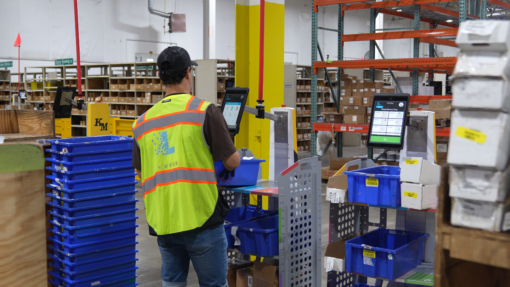
Rather than relying exclusively on physically intensive travel and repetitive picking, warehouses are creating roles centered on oversight, coordination, and exception management.
Industry observers increasingly point to robots as collaborators capable of handling routine tasks while encouraging organizations to invest in workforce development and upskilling.
For many operations, this shift is already underway.
Managing Robots Is Becoming Part of the Job
As robotics adoption grows, so does the scope of responsibility for warehouse leaders.
Gartner predicts that one in 20 supply chain managers will oversee robots rather than people by 2030, signaling how quickly robotics management is entering mainstream operations.
This does not require managers to become engineers, but it does call for a new kind of fluency in understanding how automated systems behave, where they create value, and how workflows can be adjusted as conditions evolve. Much of this orchestration happens through software that provides visibility into robot performance and workflow optimization.
Leadership begins to shift from directing activity to orchestrating performance. It is a subtle change — but an important one, because orchestration creates stability.
Continuous Improvement Is No Longer Occasional
One of the most overlooked advantages of modern robotics is not simply productivity. It is the ability to adapt.
Operations can reconfigure workflows, remap robot paths, deploy additional units during peak periods, and adjust capacity without leaning on the workforce to compensate.
Continuous improvement becomes embedded in the operating model rather than reserved for periodic initiatives.
Leaders stop asking whether the warehouse can withstand change and start asking how quickly it can respond, and that shift marks a turning point in how resilience is built.
When Infrastructure Adapts, People Don’t Have to Compensate
In highly manual environments, variability is often absorbed by the workforce. Associates stretch to meet spikes, supervisors rebalance labor on the fly, and teams rely on effort to close operational gaps, but effort is not a scalable strategy.
Flexibility-first automation changes the equation and redistributes how work gets done across people and technology.
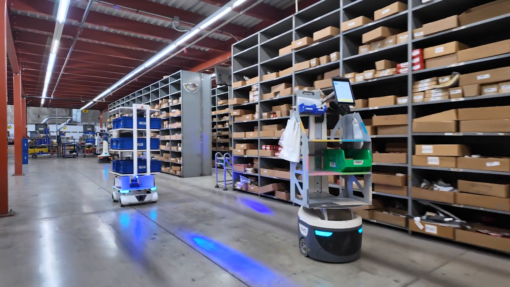
When autonomous mobile robots (AMRs) handle repetitive movement, employees can focus on higher-value responsibilities — guiding workflows, resolving exceptions, and supporting continuous improvement.
Technology does not replace operational expertise. This is the point where adaptable infrastructure becomes a stabilizing force for the workforce.
It creates space for it to expand.
And for many organizations, that shift is becoming a stabilizing force.
Why This Shift Leads Warehouses Toward Operational Confidence
At a certain point, the conversation stops being about labor alone and becomes about reliability with leaders asking a different set of questions:
- Can we sustain throughput if hiring slows?
- Can we scale without overextending the workforce?
- Can we adapt without introducing disruption?
This is where having confidence in your warehouse operations enters the discussion.
Operational Confidence does not eliminate uncertainty, because modern fulfillment is too dynamic for that.
It is about building an environment that can perform through uncertainty - supported by adaptable infrastructure and a workforce prepared to lead within it.
Organizations that invest in both technology and workforce capability position themselves to absorb variability rather than react to it.
And increasingly, that distinction separates warehouses that cope with disruption from those that operate with confidence.
The Leadership Opportunity Ahead
Labor markets will continue to evolve, demand patterns will shift, complexity will grow, and the organizations gaining advantage are not waiting for stability to return.
They are designing operations that can perform without it.
Managing robots is becoming part of modern warehouse leadership — because resilience demands it. And as roles expand and skills deepen, the workforce itself becomes a source of operational strength.
The future warehouse will not be defined by how many people it hires — but by how effectively it enables the people it has.
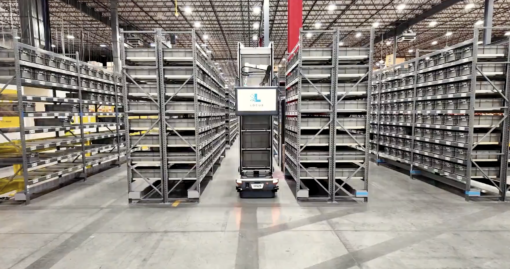
Locus Robotics helps fulfillment organizations design operations built for uncertainty through a coordinated fleet that includes Locus Origin, Locus Vector, and Locus Array — orchestrated by the LocusONE platform. By pairing flexibility-first automation with workforce enablement, warehouses can strengthen performance, support their people, and operate with greater Operational Confidence.
If you’re rethinking how your operation scales, adapts, and supports its workforce, reach out to Locus Robotics to explore what flexibility-first automation could look like inside your facility.


 Article