For decades, warehouse design revolved around fixed infrastructure as miles of conveyor belts, mechanized sorting lines, and rigid racking systems represented the pinnacle of industrial progress that was built to last and optimized for repeatability. But permanence has become the enemy of agility. In a world of constant change, the true measure of warehouse ROI is no longer throughput per square foot. It’s flexibility.
At Staples Canada, this evolution came to life inside a 140,000-square-foot fulfillment center in Vancouver. The building had served the business well for years, but by 2024 it was showing its age. Its three-mile-long single-drive-shaft conveyor, originally designed for bulk movement and static demand, was costly to maintain and incapable of adapting to new omnichannel realities.
“It was old,” said Ash Van Schelven, Regional FC Manager. “It was difficult to maintain and very costly.” For a company serving 650,000 preferred customers with next-day delivery expectations, the lack of flexibility created real pressure.
From Fixed to Flexible
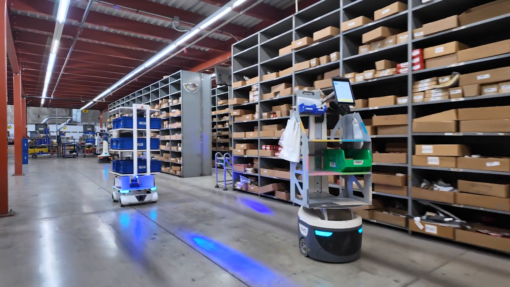
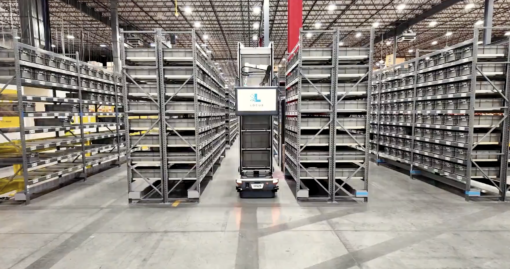
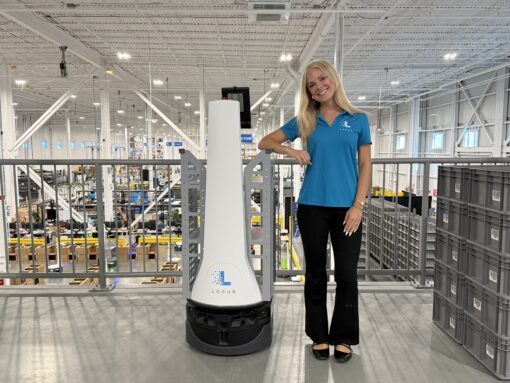
Rather than rebuild from scratch, Staples Canada reimagined what infrastructure could mean. The company replaced its legacy conveyors with Locus Robotics’ autonomous mobile robots (AMRs) and LocusONE platform, which turned a static, mechanized facility into a responsive, data-driven network of moving intelligence. The transition happened without ripping out equipment or halting production. AMRs navigated the same aisles and workstations employees already used, learning the floor plan and synchronizing with the warehouse management system in real time.
“We’ve transformed a 29-year-old building run with old, rusted conveyors into a state-of-the-art robotic facility,” said Vidhu Monga, Senior Director of Supply Chain. “Locus Robotics not only provided a strong solution, but they built a relationship we can foster into the future.” Within weeks, productivity nearly doubled from 42 units per hour (UPH) to 82 UPH, and cycle time dropped by 70 percent. And because the system reduced overtime, teams finished their shifts on time while maintaining full daily output.
This transformation gave Staples Canada operational confidence to meet unpredictable demand without disruption.
Measuring Flexibility as Warehouse ROI
Traditional ROI metrics were built for predictable demand, and they measured fixed-asset utilization, not operational elasticity. But volatility has become the new normal with shorter product lifecycles, promotional spikes, and unpredictable order patterns making static infrastructure obsolete the moment it’s installed. Flexibility, once a luxury, is now a survival metric.
Staples Canada’s partnership with Locus Robotics flipped the cost equation through a Robots-as-a-Service (RaaS) model. Robots could be added or returned as needed, allowing the business to scale capacity in real time without capital expense. During the back-to-school surge, which is the company’s busiest season, the Vancouver site increased its fleet of robots, and then seamlessly scaled back once demand normalized. The result was consistent service, lower cost, and zero disruption.
“The ROI wasn’t just about productivity,” said Paul Giamberardino, Chief Supply Chain Officer. “It was about flexibility. The RaaS model gives us the ability to surge when we need it and serve customers better.”
The True Cost of Inflexibility
Fixed systems often hide their inefficiencies until stress exposes them, and every maintenance delay halts production. Every layout adjustment demands contractors, permits, and downtime. In contrast, mobile robotics redefines infrastructure as software that is fluid, upgradable, and adaptive.
The difference shows up in both the P&L and the people:
- Adaptability: Workflows can be reconfigured in hours instead of weeks.
- Scalability: Robot fleets expand or contract instantly to match volume.
- Reliability: Eliminates belts, motors, and other mechanical failure points.
- Longevity: Extends life of brownfield facilities through software-defined automation.
These gains collectively transform ROI from a static number into an ongoing capability. Every process improvement compounds across future seasons instead of resetting with each rebuild.
Culture as Infrastructure
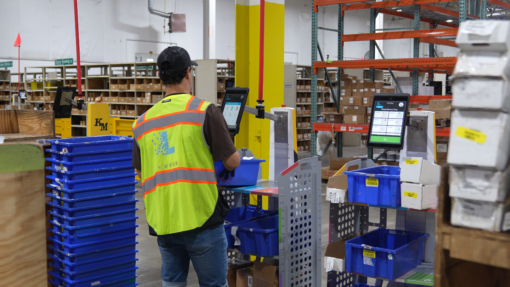
Technology alone doesn’t make a warehouse flexible; people do. One of the unexpected outcomes of Staples Canada’s transformation was cultural. “Employee engagement is up,” Giamberardino said. “The building is quieter, less dusty, and less hot.” Associates who once spent their days pushing carts or clearing conveyor jams now focus on accuracy and flow while robots remove the physical barriers that slow them down.
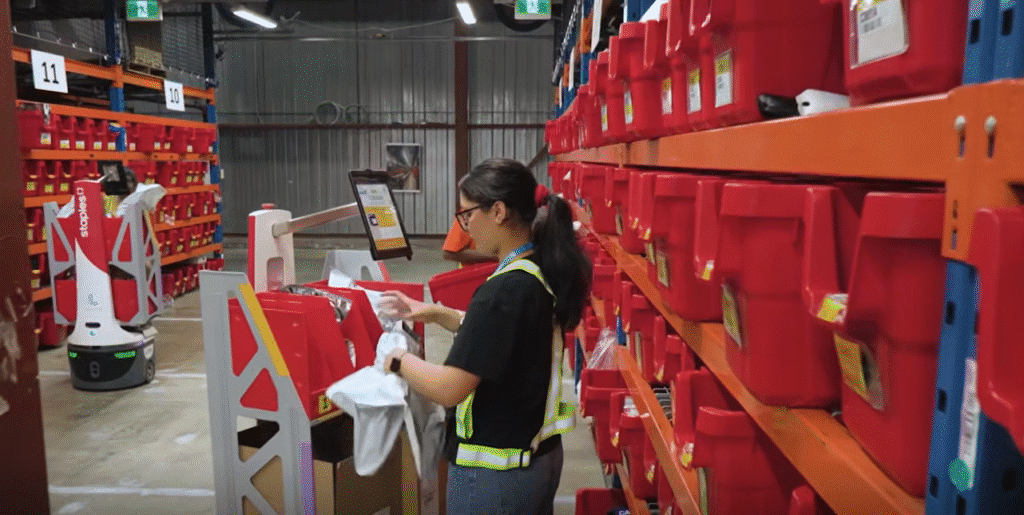
Workers like Parmpreet Kaur describe the change simply: “We don’t have to carry anything in our hands. We can concentrate more on the picking.” That sense of empowerment reinforces retention and helps Staples compete for talent in a tight labor market.
A New Lens on Warehouse ROI
When executives calculate ROI today, they must account for more than throughput. They must quantify the value of resilience: the ability to meet demand spikes without overtime, to integrate new SKUs without remodeling, and to sustain worker satisfaction without turnover. In Staples Canada’s case, the investment paid off across every dimension in financial, operational, and human.
For fulfillment leaders, the lesson is clear that infrastructure can no longer be something you set and forget. It must evolve as fast as customer expectations. Locus Robotics’ autonomous mobile robots (AMRs) offer a path forward that keeps legacy facilities competitive, responsive, and relevant.
The Broader Industry Shift
Across the logistics landscape, modernization is no longer synonymous with reconstruction. The winning strategy is to layer intelligence onto what already exists. Mobile robotics deliver that capability at scale, providing the flexibility to grow, adapt, and continuously optimize.
Staples Canada’s story demonstrates that the future of warehouse ROI isn’t fixed to the floor. It moves independently, intelligently, and in lockstep with demand.
Read the Staples Canada case study and view the case study video to learn more.


 Article