Live Event Series: See real-world automation in action.
Live Event Series: See real-world automation in action. — Learn More

July 24, 2026
What are Polyfunctional Robots? A Guide to the Next Evolution of Warehouse Automation
 Mary Hart, Sr. Content Marketing Manager
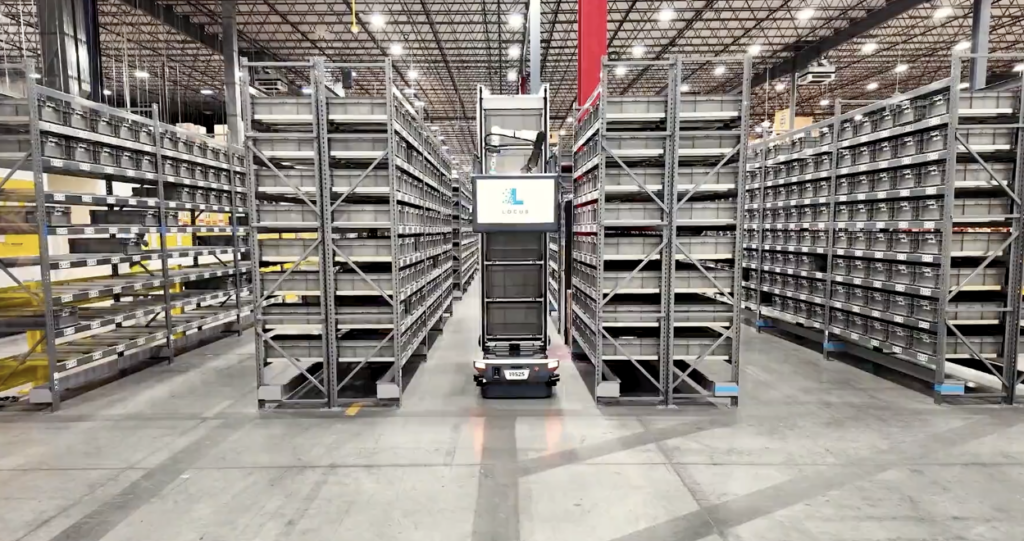
Polyfunctional robots are robotic systems designed to perform multiple related tasks within a specific operating environment, helping organizations support more workflows with greater flexibility and efficiency.
Key Takeaways
- Polyfunctional robots are designed to perform multiple related tasks within the environments they were built to support.
- Advances in robotics, perception, software, and orchestration are making polyfunctional robotics commercially viable.
- Polyfunctional robots help warehouses adapt to changing workflows, labor availability, and fulfillment requirements.
- In warehouse operations, greater flexibility can create operational value beyond productivity improvements alone.
- As fulfillment environments become more dynamic, polyfunctional robotics may play an increasingly important role in future warehouse automation strategies.
Warehouse automation is entering a new phase. Instead of deploying separate robots for individual tasks, organizations are increasingly looking for systems that can perform multiple workflows, adapt as operational needs change, and work together through intelligent orchestration. In a recent webinar, Abdil Tunca, Senior Principal Analyst at Gartner, described this shift as polyfunctional robotics, which is a move beyond single-purpose automation toward robots capable of delivering broader operational value. While the concept applies across industries, its implications for warehouse automation are becoming increasingly relevant as fulfillment operations grow more dynamic. For warehouse leaders, this evolution isn't about replacing people or chasing the latest AI trend. It's about building more adaptable fulfillment operations.
Why Warehouse Robotics Is Entering a New Phase
For years, warehouse automation has largely followed a predictable path. As operational challenges emerged, new technologies were introduced to solve them. One robot transported inventory. Another picked orders. Another handled putaway. Each system was designed to perform a specific task as efficiently as possible.
That model delivered meaningful productivity gains, but it also created new complexity. As fulfillment operations grew more dynamic, with changing order profiles, expanding SKU assortments, labor variability, and constant pressure to improve throughput, warehouses increasingly found themselves managing collections of specialized technologies rather than adaptable operations.
As operational requirements continue to evolve, warehouse leaders are increasingly looking for automation that can contribute across multiple workflows rather than remain confined to a single task. This shift has helped drive interest in what analysts now describe as polyfunctional robots.
What Are Polyfunctional Robots?
Traditional warehouse robots are typically designed to perform one primary function extremely well. According to Gartner, polyfunctional robots expand on that model by performing multiple related tasks within the environments they are designed to support. Rather than optimizing for a single repetitive activity, they are built to support a broader range of operational activities while remaining purpose-built for a specific operational setting. While the concept applies across industries, its implications for warehouse automation are becoming increasingly relevant as fulfillment operations grow more dynamic.
This doesn't mean robots are suddenly becoming general-purpose machines that can do everything. Instead, they're becoming more capable within the environments they were designed to operate in. Gartner positions polyfunctional robots between today's point solutions and the longer-term vision of more generalized robotics, allowing organizations to gain practical operational value without waiting for fully autonomous humanoid systems to mature.
For warehouse operations, this evolution comes at an important time. Distribution centers are no longer managing predictable, repetitive workflows. Consumer expectations, SKU proliferation, labor availability, and inventory volatility require operations that can adapt far more quickly than many traditional automation systems were designed to support.
Why Are Polyfunctional Robots Emerging Now?
Polyfunctional robotics didn't emerge from one breakthrough. It's the result of several technologies maturing at the same time. Improvements in robotics, perception, software, and orchestration have expanded what robots can reliably accomplish within real operating environments.
Just as important, these technologies are no longer developing in isolation. A robot's capabilities depend on hardware, software, perception, and decision-making working together as an integrated system. As those areas have matured, robots have become capable of supporting a broader range of workflows while maintaining the consistency required for commercial operations.
Warehouse automation has reached an inflection point because operational demands have evolved alongside these technological advances. Distribution centers are managing greater SKU variety, fluctuating order volumes, tighter delivery expectations, and ongoing labor challenges. Static automation designed around a single workflow is often difficult to adapt as those conditions change.
As automation becomes more widespread, the challenge is no longer simply adding another robot. It's coordinating more work across increasingly dynamic operations. As Gartner notes, the value of a polyfunctional robot comes not only from the tasks it can perform, but from its ability to remain productive as operational priorities shift.
How Polyfunctional Robots Change Warehouse Operations
As warehouses have become more automated, they've also become more complex, requiring operators to coordinate an increasing number of workflows, systems, and autonomous technologies. In that environment, the value of polyfunctional robotics isn't simply that robots can perform more tasks. It's that warehouse work itself is interconnected, and changes in one workflow often affect the entire operation.
Warehouse workflows don't operate in isolation. Inventory arrives, is stored, replenished, picked, consolidated, and shipped through a series of connected processes. A disruption in one workflow rarely stays contained. It creates downstream effects that ripple across the operation, influencing labor allocation, throughput, inventory availability, and order fulfillment.
Traditional automation has helped optimize many of those individual processes. Polyfunctional robotics expands on that foundation by giving warehouse operators greater flexibility in how work is performed as priorities change. Instead of introducing a new automation system for every operational challenge, organizations can deploy robotic capabilities that support a broader range of operational needs within the same environment.
That adaptability becomes increasingly valuable as fulfillment operations evolve. Seasonal demand shifts, changing product assortments, new service offerings, labor constraints, and business growth can all alter how work flows through a distribution center. Rather than sitting idle when demand for one task slows, automation that can support multiple workflows can be redirected where it creates the most operational value.
The result isn't simply greater productivity. It's greater operational flexibility: the ability to adapt as warehouse conditions change while maintaining consistent execution across the fulfillment process. As operations become more dynamic, that flexibility may prove just as valuable as speed or throughput improvements.
While the concept of polyfunctional robotics is still emerging, its impact is already becoming visible in warehouse operations. The question is no longer whether a robot can perform multiple workflows, but how those capabilities create measurable operational value in real-world environments.
From Specialized Automation to Polyfunctional Robotics
Traditional Approach | Emerging Approach |
Automation optimized around individual workflows | Robotics capable of supporting multiple workflows |
Additional requirements often meant adding another system | A single platform can support a growing range of workflows |
Robots execute one primary function | Robotic resources can be applied across changing operational priorities |
Success measured by task efficiency | Success measured by operational value across changing requirements |
Polyfunctional Robotics in Practice
Locus Array provides a practical example of how polyfunctional robotics is moving from industry concept into real-world warehouse operations. As the industry's first Robots-to-Goods fulfillment system, Array is designed to support a broader range of warehouse activities within a single robotic platform.
Rather than being limited to a single workflow, Locus Array extends autonomous execution directly into the warehouse aisle. A single robotic platform can support workflows including picking, putaway, replenishment, induction, slotting, and returns, allowing operations to automate more of the fulfillment process as business requirements evolve. Rather than sitting idle when demand for one workflow slows, the platform can be applied across multiple operational priorities as needs change throughout the day.
This approach reflects a broader shift in warehouse automation. As robotic capabilities expand, warehouse leaders can begin thinking less about automating individual tasks and more about building adaptable fulfillment operations. Polyfunctional robots become part of a larger operational strategy, helping warehouses respond more effectively to changing operational priorities and business requirements.
Importantly, polyfunctional robotics does not eliminate the need for other purpose-built automation. Warehouses are complex environments, and different technologies will continue to play different roles. The greatest operational value often comes from orchestrating those technologies, so each performs the work it is best suited to do. In that sense, polyfunctional robots become part of a broader automation ecosystem rather than a replacement for it.
For warehouse leaders, the opportunity extends beyond productivity alone. The value of polyfunctional robotics isn't measured by how many tasks a robot can perform. It's measured by how effectively those capabilities help warehouses adapt as operations evolve. As fulfillment requirements continue to change, systems that can contribute across the operation provide organizations with greater flexibility to scale, respond to new business demands, and maximize the value of their automation investments over time.
What to Look for in a Polyfunctional Robot
As polyfunctional robotics moves from emerging concept to commercial reality, warehouse leaders will need new ways to evaluate automation. The question is no longer simply whether a robot can complete multiple tasks. The more important question is whether those capabilities create meaningful operational value.
Several considerations can help distinguish truly polyfunctional robotic systems from automation that simply adds features or workflows.
Purpose-built for the environment
Polyfunctional robots should be designed for the realities of warehouse operations. Mobility, perception, manipulation, and execution all need to work together reliably in a dynamic fulfillment environment.
Utilization across changing priorities
Polyfunctional robots deliver the most value when they can be applied where work is needed most. As operational priorities shift throughout the day, robotic resources should be able to support different workflows without remaining idle between tasks.
Reliable execution, not just more capabilities
A polyfunctional robot is only valuable if it can perform each workflow consistently in real operating conditions. Breadth matters, but reliability determines whether those capabilities improve the operation or add more exceptions to manage.
Adaptability over time
Warehouse operations evolve. Automation should be able to support new workflows and changing business requirements without requiring organizations to continually introduce new robotic platforms.
Integration with broader warehouse operations
Polyfunctional robots don't operate in isolation. Their value increases when they work as part of an orchestrated warehouse ecosystem, integrating with warehouse software, existing automation, and other robotic systems so work can be coordinated across the operation as priorities change.
The Future of Warehouse Automation
Warehouse automation has never stood still. From conveyors and AS/RS systems to autonomous mobile robots and AI-powered software, each generation of technology has expanded what fulfillment operations can accomplish. The next phase of that evolution may not be defined by adding more automation, but by making automation more adaptable.
Polyfunctional robotics reflects a broader shift in how warehouse leaders evaluate technology. Rather than asking whether a robot can perform a specific task, organizations are increasingly asking how that robotic resource can contribute across the operation as priorities change.
That doesn't mean purpose-built automation will disappear. Warehouses are complex environments, and different technologies will continue to play different roles. The greatest value will come from combining those technologies through effective orchestration, allowing each system to contribute where it creates the most operational benefit.
For warehouse leaders, the real question is no longer how many tasks can be automated. It's how effectively automation can adapt as the business evolves. Polyfunctional robotics is one example of how the industry is beginning to answer that challenge.
How Ready Is Your Warehouse for the Next Phase of Automation?
As warehouse operations become more dynamic, automation must be able to adapt alongside changing business requirements. Learn how Locus Robotics helps organizations support a broader range of operational activities through intelligent orchestration, AI-powered automation, and flexible robotic solutions.
Frequently Asked Questions About Polyfunctional Robots
What makes a robot polyfunctional?
A polyfunctional robot is a robotic system designed to perform multiple related tasks within the environment it was designed to support. Rather than being limited to a single function, polyfunctional robots can contribute across multiple operational activities while remaining purpose-built for a specific setting. In warehouse environments, those capabilities may include workflows such as picking, putaway, replenishment, induction, slotting, and returns.
How are polyfunctional robots different from traditional warehouse robots?
Traditional warehouse robots are typically optimized for a specific workflow, such as transporting inventory or assisting with picking. Polyfunctional robots are designed to perform multiple warehouse workflows, allowing organizations to expand automation capabilities within a single robotic platform while complementing other purpose-built warehouse technologies.
Are polyfunctional robots the same as humanoid robots?
No. Polyfunctional robots and humanoid robots are different concepts. Polyfunctional robots are designed to perform multiple tasks within a specific operating environment, while humanoid robots are designed to resemble the human form. The two concepts are not interchangeable, and a polyfunctional robot does not need a humanoid design.
What warehouse workflows can polyfunctional robots perform?
Capabilities vary by robotic platform, but polyfunctional robots may support workflows such as picking, putaway, replenishment, induction, slotting, and returns. The goal is to enable a single robotic system to perform multiple operational functions rather than being limited to one repetitive task.
Do polyfunctional robots replace other warehouse automation systems?
Not necessarily. Polyfunctional robots are designed to complement existing warehouse automation rather than replace any other technology. Their value often increases when they operate as part of an orchestrated ecosystem alongside conveyors, AS/RS systems, warehouse software, AMRs, and other purpose-built solutions.
How should warehouse leaders evaluate polyfunctional robotics?
Warehouse leaders should look beyond the number of tasks a robot can perform. More important considerations include how reliably the system executes multiple workflows, how well it integrates with existing warehouse operations, and how effectively it can support changing business requirements over time.
Why are polyfunctional robots becoming more important?
Advances in robotics, perception, software, and orchestration have expanded what automated systems can reliably accomplish. At the same time, warehouses are managing greater operational complexity, labor variability, SKU growth, and changing fulfillment requirements. Polyfunctional robots are emerging as one way to help organizations adapt to those changing demands while making better use of automation resources.
 Article