For many warehouses, peak season doesn’t just mean more orders. It means pick falling behind, pack getting buried, and supervisors scrambling to keep the shift on track. What should be a predictable surge often turns into a scramble to keep the floor moving.
For years, the default response has been simple: bring in more temporary labor. As the calendar moves toward back-to-school, holiday, or promotional peaks, warehouses add seasonal workers to try to keep up with rising volume. But temporary staffing often introduces new problems such as training delays, inconsistent performance, and a labor plan that starts to break down just when demand hits its highest point.
At Staples Canada, that familiar cycle prompted the operations team to rethink how they handled peak season. Instead of relying on seasonal hiring to absorb demand spikes, the team looked for a way to handle more volume while keeping the same core workforce.
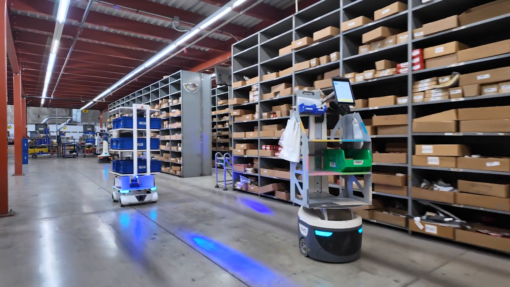
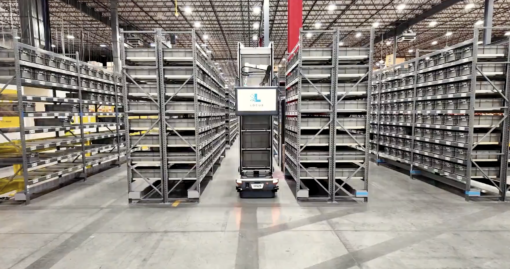
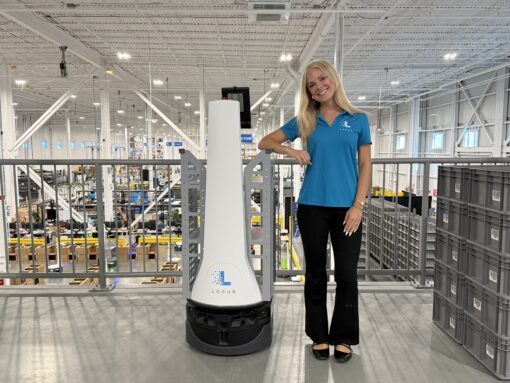
By deploying Locus Robotics autonomous mobile robots (AMRs) through a Robots-as-a-Service (RaaS) relationship, Staples Canada found a way to handle peak volume without expanding headcount. Instead of adding seasonal labor, the team added robots that move orders across the floor, cutting thousands of hours of walking, and helping prevent the backups that often start when peak demand hits.
This is how they did it and how any warehouse can build the same scalable advantage.
Start with Predictability, Not Panic
The first rule of smart scaling is to treat peaks as part of the plan, not as an emergency. For years, Staples Canada’s operations team mapped its back-to-school volume curve but still struggled to balance labor. Recruiting, onboarding, and training temporary staff consumed weeks, and the labor plan often broke down just as demand hit its peak.
The turning point came with data. Using performance insights from LocusHub, part of the LocusONE platform, Staples could forecast exactly when and where to increase capacity. “We used to rely on averages,” said Mert Selcuk, Senior Manager of Supply Chain Strategy and Capabilities, during his appearance on the Warehouse Automation Matters podcast. “Now we make adjustments based on live metrics, not guesswork.”
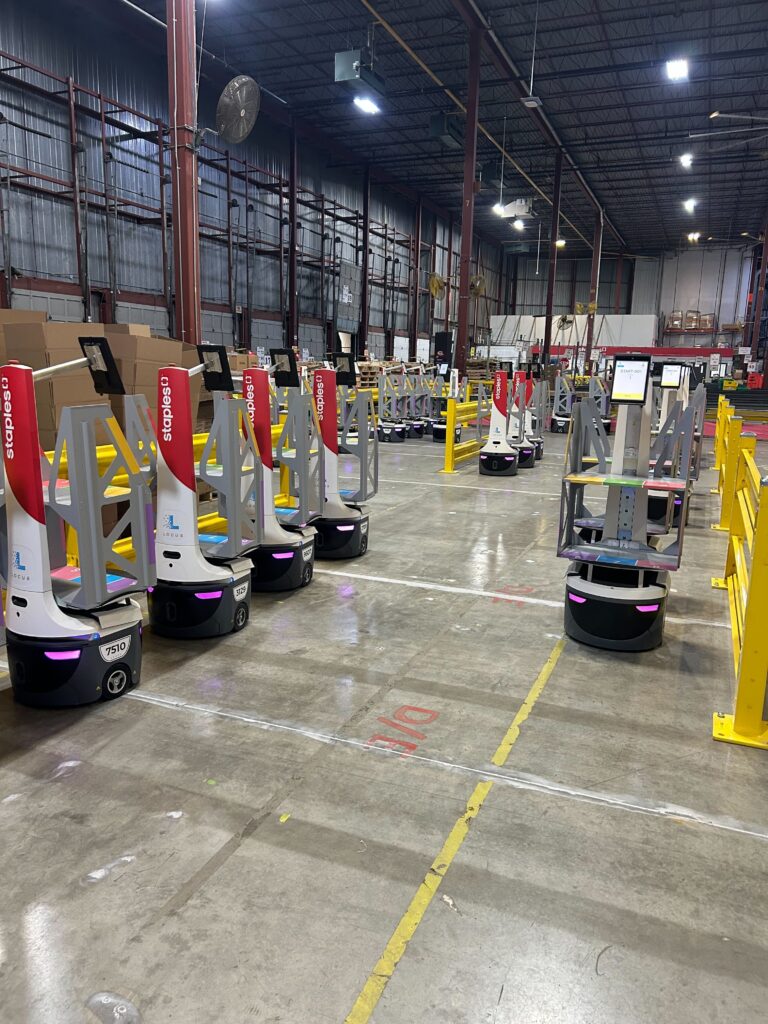
Instead of hiring more people, Staples simply scaled its robot fleet from 41 to 48 units, which is a 17% increase in available capacity. The flexibility came from its RaaS subscription model, which allowed the team to add robots for a few months and then scale back seamlessly.
Redefine the Warehouse Labor Equation
Traditional warehouse peak season thinking assumes that more work requires more people. But robotics in the form of autonomous mobile robots (AMRs) removes thousands of hours of walking and lets the same team move more orders per hour.
Ash Van Schelven, Regional FC Manager, explained that the technology changed how his team viewed staffing. “We used to think in terms of people per shift. Now we think in terms of throughput per hour since the robots give us flexibility we never had before.”
That mindset shift enabled Staples to maintain service levels without overtime or burnout. In most warehouses, peak season pressure doesn’t show up all at once. It starts with pick falling behind, then carts begin stacking up at pack, and before long supervisors are trying to keep the dock from backing up.
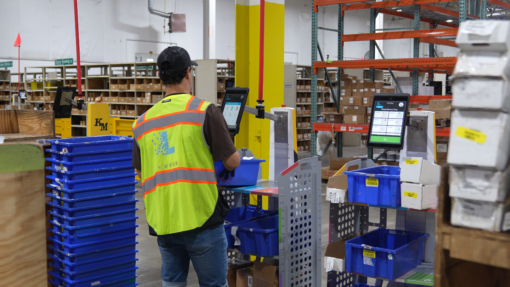
Associates now focus on picking accuracy and speed, while robots handle transport and routing, cutting the walking that used to eat up most of the shift. The result is a model where the same team can handle more volume without adding people.
Your Move
- Evaluate peak-season cost drivers. Include recruiting, onboarding, and training in your ROI model.
- Identify repeatable workflows like transport or replenishment that robotics can absorb.
- Use productivity data to calculate how many additional robots would offset temporary labor needs.
Design for Elastic Capacity
For the best scalability, you need to have automation with the right commercial model. For Staples Canada, the RaaS approach turned fixed costs into flexible ones as there was no need to purchase or maintain hardware that would sit idle for most of the year.
This elastic capacity (the ability to increase or decrease warehouse resources as needed) also gave the operations team confidence they could handle demand spikes without scrambling for labor since they knew that as order volumes climbed, help was only days away. “We can add robots quickly without disrupting anything,” said Paul Giamberardino, Chief Supply Chain Officer. “It keeps us nimble and efficient at the same time.”
With warehouse automation, Staples Canada reduced temporary labor by 67%, dropping from 15 seasonal hires to just five, and still improved their throughput during the busiest months.
Your Move
- Explore service-based robotics models that allow for seasonal scaling.
- Negotiate flexibility clauses so you can add or return capacity within days.
- Align procurement, IT, and operations teams early to streamline expansion approvals.
Empower Teams to Work with the Technology
Elastic capacity only matters if people trust it and at Staples; the automation rollout focused heavily on training and communication. Associates were briefed on how the AMRs would help them and were encouraged to give feedback throughout the process.
That engagement paid off as associates quickly saw the benefit of having robots handle the physically demanding work. They ended shifts without being worn out from walking the building. “The robots make the jobs we have safer and more sustainable,” Van Schelven said.
This human-centered approach made scaling not just an operational win, but a cultural one. When peak season hit, the team viewed the arrival of additional robots as an asset, not an intrusion.
Your Move
- Communicate early about how automation supports employees.
- Offer hands-on training to build comfort and ownership.
- Reinforce metrics that show shared success, like reduced overtime or error rates.
Keep Improving Between Peaks
The smartest operators use downtime between busy periods to refine their systems. Staples Canada continues to analyze performance data after each surge, adjusting pick paths and layout to make the next peak run smoother.
That continuous improvement cycle ensures that every peak season is smoother than the last. It’s a process built not on reaction, but on readiness.
Your Move
- Review post-peak metrics within 30 days to identify new improvement opportunities.
- Document lessons learned to inform future capacity planning.
- Treat scaling as a year-round strategy, not a seasonal event.
Final Takeaway
Warehouse leaders can’t control when peaks arrive, but they can control how prepared they are to handle them. Staples Canada’s experience shows that flexibility, not headcount, is the true key to scalability. By combining data-driven planning with Locus Robotics’ AMRs and a service-based model, the company turned its biggest seasonal challenge into a competitive strength.
For fulfillment teams everywhere, the message is clear that the strongest warehouses design for peak instead of scrambling to react to it.
Read the Staples Canada case study and view the case study video to learn how Locus Robotics AMRs can help your warehouse during peak season and year-round.


 Article