For years, warehouse leaders planned around known peaks such as holiday surges, promotional events, and seasonal volume swings that could be forecast months in advance and staffed accordingly.
That world no longer exists.
Today’s retail and 3PL fulfillment operations are operating under a different kind of pressure that is defined by volatility that arrives without warning and disappears just as quickly. A product can go viral on TikTok over a weekend, overwhelm a fulfillment network by Monday, and be irrelevant two weeks later. Tariff changes can force companies to relocate inventory across borders almost overnight. Labor availability fluctuates daily, not seasonally.
When I talk with retailers and 3PLs, the theme that comes up most isn’t speed or even throughput. It’s risk, and, more specifically, how to reduce it without slowing the business down.
The New Volatility Problem Inside Retail and 3PL Fulfillment Operations
Labor challenges haven’t gone away. If anything, they’ve become more complex.
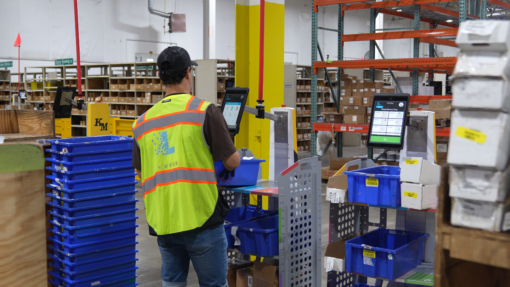
Availability remains an issue, but so does quality, reliability, and unpredictability. Missed shifts. Rising costs. Temporary labor that’s difficult to train quickly during surges. All of this creates daily uncertainty on the warehouse floor.
At the same time, a new type of volatility has entered the picture — one driven by social commerce. Many 3PLs are now supporting brands whose demand patterns can’t be forecast traditionally. These products may spike dramatically for a short period and then go dormant for weeks.
What makes this especially challenging is that many of these brands don’t manage their own distribution. The operational burden lands squarely on the 3PL, who must absorb the disruption while still meeting service-level commitments.
When this happens, confidence breaks down.
Operations shift into firefighting mode. Leaders throw labor at the problem, accept higher costs, and focus on getting orders out the door — knowing they’ll deal with the downstream consequences later. It’s not ideal, but when volatility is unpredictable, short-term survival often wins.
Why Fixed Automation isn’t the End Goal
Five or six years ago, large, fixed automation systems were often viewed as the end goal with the thought to build once and optimize forever. But, today, many warehouse leaders are questioning that assumption.
The concern isn’t whether those systems can deliver performance. In the right environment, they absolutely can. The concern is what happens when the assumptions they were built on no longer hold.
Forecast accuracy remains one of the biggest challenges in retail and 3PL fulfillment. Most organizations hedge their numbers; retailers add buffers; and 3PLs add additional buffers on top of that. By the time automation decisions are made, the forecast may already be significantly inflated.
Building fixed infrastructure around a five-year forecast in a market where demand shifts weekly introduces real financial risk. If volume doesn’t materialize as expected, that investment becomes difficult — and sometimes impossible — to recover.
That’s why many operations are now prioritizing de-risking over theoretical maximum ROI. They want automation that supports today’s needs while preserving options for tomorrow.
Supply Chain Shifts Force Fast Decisions
Global disruption has accelerated this mindset even further as tariff changes and geopolitical uncertainty have forced companies to move inventory back into the U.S. far faster than anyone anticipated. I’ve seen customers pivot distribution strategies mid-implementation — preparing facilities in one region only to redirect operations to another within weeks.
These aren’t isolated cases. They’re becoming common.
While building availability has improved compared to 2022 and 2023, the speed at which decisions must now be made has fundamentally changed how warehouse leaders think about infrastructure. Flexibility isn’t nice to have. It’s a requirement for protecting the business.
Dark Warehouses and Micro Fulfillment Centers
The idea of the fully dark warehouse has been discussed for years. In practice, most operators view it as aspirational rather than achievable — at least with acceptable risk. What they do want is to get as close as possible.
The hesitation has historically been around single points of failure, system rigidity, and technology maturity. If one component goes down in a fully automated environment, the operational impact can be severe.
That’s why the conversation has shifted toward incremental autonomy rather than all-or-nothing automation. Reduce manual touches where it makes sense. Fully automate specific SKU segments. Create human-free zones that deliver measurable value without putting the entire operation at risk.
This same thinking is resurfacing interest in micro-fulfillment and back-of-store automation. Previous attempts struggled to justify cost relative to impact. Now, with more modular, right-sized automation options, retailers are revisiting these models as practical extensions of their fulfillment strategy.
Why Agility and Flexibility are Important
Flexibility and scalability are still important, but many leaders are now using a different word: agility.
Flexibility allows you to react. Agility allows you to get ahead of the work. In fast‑moving retail and 3PL environments, that difference determines whether leaders are constantly adjusting to volatility or able to stabilize performance before spikes happen
Agile systems make it possible to redeploy resources quickly, adjust workflows based on real conditions, and shift capacity to where it’s needed most — without rebuilding infrastructure or locking into long-term assumptions.
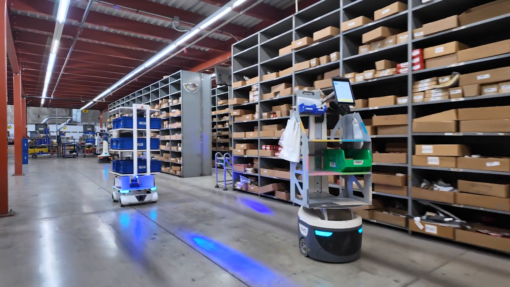
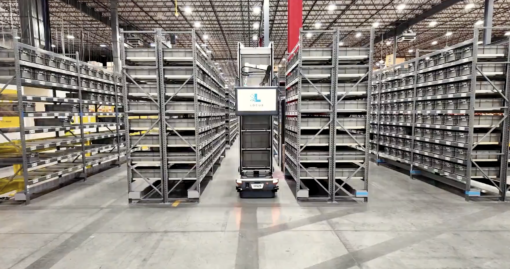
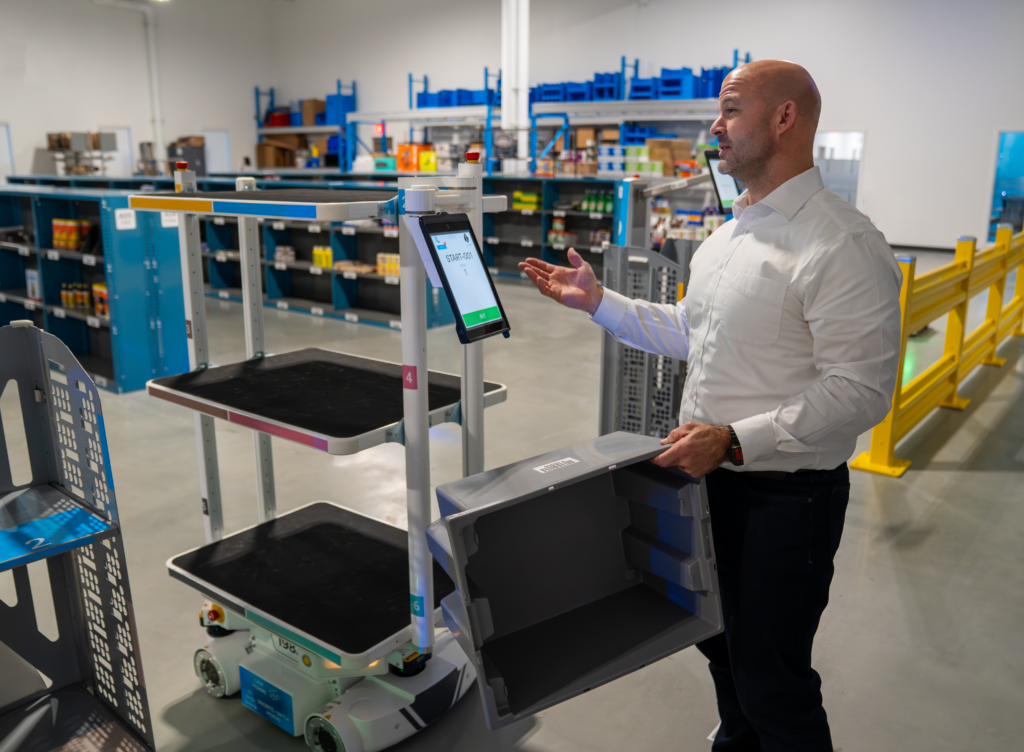
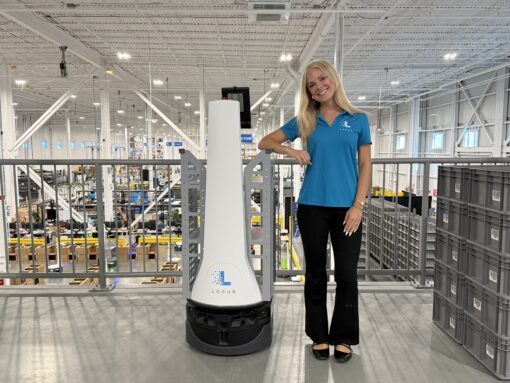
This is where autonomous mobile robots (AMRs) like the ones from Locus Robotics continue to resonate. Rather than betting everything on one large system, operators can start with current demand and expand as the business evolves. They gain a safety net in the ability to scale up during surges and scale back when volumes normalize. That modularity is what makes automation a low‑risk way to adapt as demand patterns shift.
Just as important, distributed robotic systems avoid single points of failure. If one unit is offline, the operation continues. That resilience matters when uptime directly affects customer trust.
Building Confidence Through Connected Data
Automation alone isn’t enough.
Warehouse leaders increasingly want visibility into what’s actually happening on the floor — where bottlenecks exist, which workflows create friction, and where improvements will have the greatest impact.
That requires interconnected systems and usable data, not just dashboards. The real value comes from systems that connect execution with insight, allowing leaders to orchestrate labor and automation together rather than manage them in isolation.
When operations teams can combine execution data with operational context, they’re able to move from reactive problem-solving to proactive optimization. They can identify inefficiencies earlier, adjust labor and automation strategies faster, and continuously refine performance instead of waiting for issues to escalate.
This combination — adaptable automation supported by connected insight — is what allows fulfillment operations to regain confidence in an unpredictable environment.
The Path Forward for Retail and 3PL Leaders
The most successful warehouse strategies I see today share a few common traits:
- They avoid overcommitting to assumptions about the future.
- They prioritize risk mitigation alongside efficiency.
- They invest in systems that can evolve as demand, labor, and product profiles change.
- They focus on resilience as much as speed.
Volatility isn’t going away. If anything, it’s becoming the operating norm.
But with the right mix of agility, modular automation, and operational insight, warehouse leaders can move beyond constant firefighting — and operate with confidence even when conditions shift.
That’s the challenge facing retail and 3PL fulfillment today, and it’s also the opportunity.
If any of this sounds familiar, it’s probably because you’re dealing with it every day on the floor. If you want to talk through how flexible automation can help reduce risk and bring more confidence into your operation, reach out to Locus Robotics. We’re always happy to compare notes and help you evaluate which automation strategies will give you more control, more resilience, and more confidence on the floor.


 Article