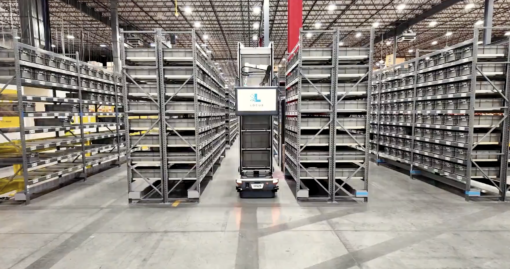
In warehouse fulfillment, speed is only as valuable as accuracy, and every mispick, every double-check, and every delay between pick and pack adds friction to an operation already under pressure. Many warehouses still rely on separate quality control (QC) stages to catch errors, but those checks slow cycle times, add cost, and often create more work than they prevent.
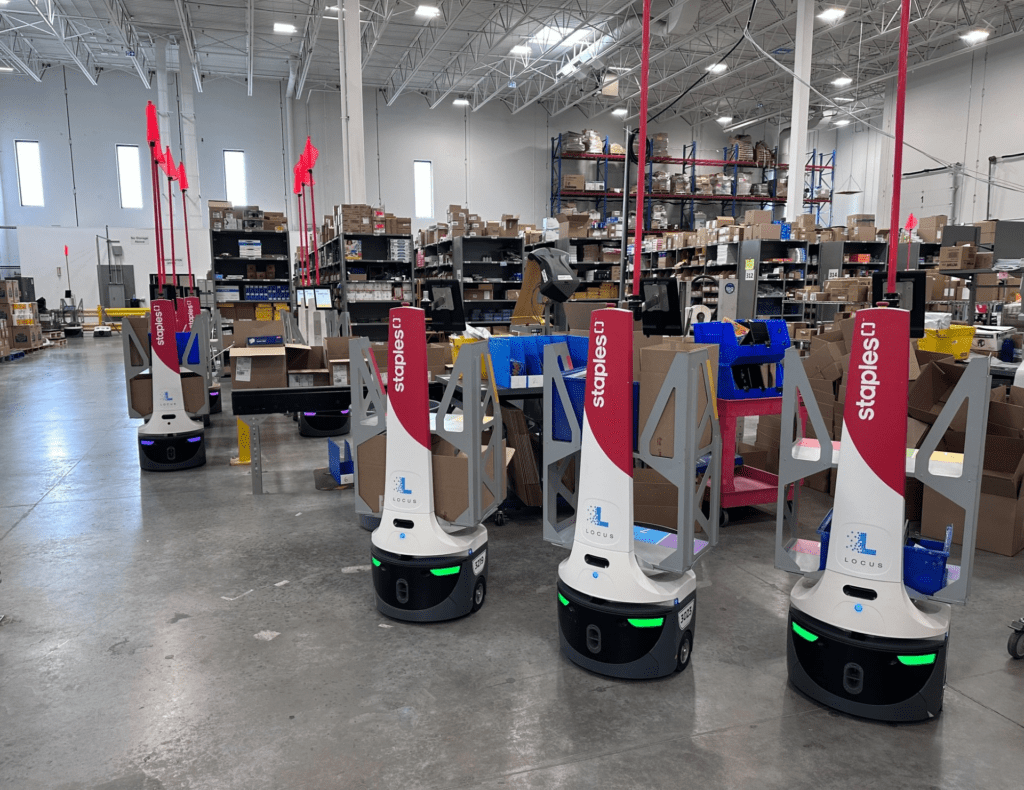
At Staples Canada, the operations team decided to reimagine the process entirely and instead of verifying quality after the fact, they built accuracy into the workflow itself. By integrating Locus Robotics autonomous mobile robots (AMRs), powered by the LocusONE™ platform, into their existing system, they reduced total order cycle time by 70% while improving accuracy across the workflow.
This kind of built-in accuracy reflects a broader shift toward flexibility-first automation, where systems adapt in real time instead of relying on downstream checks.
This is how they turned built-in accuracy into a competitive advantage.
Find the Bottleneck Before You Fix It
The first step toward reducing cycle time is visibility into your warehouse operations. Staples Canada’s engineering team began by studying every stage of the order lifecycle, from pick to ship, to identify where errors and delays occurred. Using transaction-level data and insights surfaced through LocusHub along with associate feedback, they discovered a recurring issue that the QC process itself was the bottleneck.
Before automation, associates picked items, placed them in totes, and passed those totes to a separate team for verification. That additional handling added hours to order turnaround, and it also created uneven workloads where some stations overflowed while others idled. The process was secure, but slow.
“We realized our accuracy wasn’t the problem,” said Mert Selcuk, Senior Manager of Supply Chain Strategy and Capabilities, during his appearance on the Warehouse Automation Matters podcast. “It was the way we validated it. We were spending too much time confirming what we already knew.”
Your Move
- Map your end-to-end order flow to identify where rechecks, re-scans, or re-handling occur.
- Quantify the time and labor spent on verification.
- Ask whether the process prevents mistakes or just repeats them.
Build Warehouse Accuracy into the Workflow
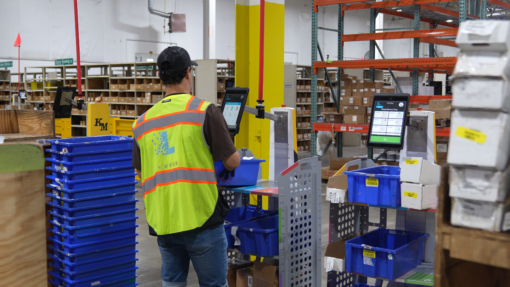
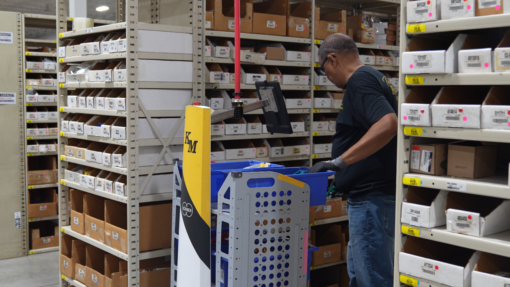
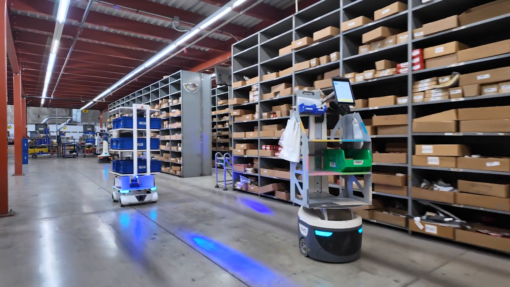
With Locus Robotics’ AMRs, Staples Canada replaced post-process validation with real-time confirmation. Every robot communicates through LocusONE with the warehouse management system (WMS), confirming SKU, quantity, and location as each item is picked. That live data validation eliminated the need for a downstream QC station entirely.
“Before Locus, we had separate quality control,” Selcuk said. “Now, our accuracy is built in at the source.”
This change removed process steps and also streamlined the entire operation. Associates now focus on accuracy during picking rather than relying on others to catch errors later. The WMS immediately flags discrepancies, reducing rework and boosting confidence in every order.
Your Move
- Audit where data validation happens in your workflow. If it’s at the end, move it closer to the point of pick.
- Integrate robots or scanning tools that can confirm order accuracy in real time.
- Measure post-pick error rates before and after implementation to prove ROI.
Empower Associates to Drive Quality
Accuracy improves fastest when the people doing the work believe they own it. At Staples Canada, that ownership grew naturally as AMRs handle transport and routing to allow associates to focus solely on precision and flow.
“Automation is only as successful as your operations team allows it to be,” Selcuk said. “We made sure associates were part of the design from the start.”
Because the technology provided instant feedback, workers could see their accuracy scores in real time, turning every pick into a measurable success. Instead of fearing mistakes, they learned from them. “It’s changed how we think about performance,” said one warehouse lead. “The data helps us improve, not just track.”
Your Move
- Involve associates in designing your accuracy processes.
- Share performance metrics transparently to encourage engagement.
- Recognize top performers publicly as accuracy and morale reinforce each other.
Measure the Real Impact of Cycle Time Reduction
Eliminating a QC step saves time and changes the economics of fulfillment. At Staples Canada, the impact rippled across multiple areas:
- 70 percent faster cycle time, meaning orders reached customers sooner.
- Increased throughput without extending shifts or adding labor.
- Improved space utilization, as the dedicated QC area was repurposed for active picking.
Ash Van Schelven, Regional FC Manager, described how the change affected morale: “People can do their jobs better now. The environment is safer, and they actually enjoy being here.”
Those human outcomes mattered as much as the numbers. By designing accuracy into the process, Staples created a system that worked for people and performance simultaneously.
Your Move
- Track both operational and human KPIs after automation, including throughput, accuracy, safety, and satisfaction.
- Use those results to refine your next automation project.
- Share outcomes across departments to sustain buy-in and momentum.
Keep Optimization Continuous
The lesson from Staples Canada’s journey isn’t just about eliminating QC. It’s about adopting a mindset of continuous refinement and accuracy, once built into the workflow, becomes a foundation for further improvement.
As Paul Giamberardino, Chief Supply Chain Officer, put it, “When you design systems that make it easier for people to succeed, performance follows naturally.”
The team now reviews accuracy and cycle-time metrics quarterly, using insights from LocusHub to fine-tune routing and picking logic. Each improvement builds on the last, which is proof that operational excellence isn’t a destination but an ongoing process.
Final Takeaway
Warehouses don’t need to choose between speed and quality. With built-in accuracy, they can have both. The key is designing systems where validation happens as work happens and not after.
For Staples Canada, that change turned a long-standing bottleneck into a breakthrough. Orders move faster, employees work smarter, and quality becomes part of the process.
Read the Staples Canada case study and view the case study video to learn more.


 Article