Last updated 3/25/26
What constitutes autonomy?
Autonomy in the context of people allows humans to perform everyday tasks without constant direction—walking, talking, opening doors, or responding to what’s happening around them in real time.
What does autonomous mean in the context of robots?
Autonomous robots follow a similar principle. But in today’s warehouse environment, autonomy goes beyond operating independently. It also includes how robots respond to changing conditions and work within a broader system to keep operations moving.
Below, we explore the concept of robot autonomy in greater detail.
Autonomous Robot Definition
What does autonomous mean in the context of robotics?
We define autonomous robots as intelligent machines capable of perceiving their environment, making decisions, and executing tasks without constant human direction.
That definition reflects how autonomy is applied in modern warehouse operations.
Autonomous robots, like humans, can make decisions and take action based on what they observe. A truly autonomous robot can:
- Make decisions based on real-time conditions
- Actuate movement or interact within that environment
These actions include decisions such as starting, stopping, and navigating around obstacles. In more advanced systems, they also extend to prioritizing tasks, adjusting workflows, and coordinating with other systems on the warehouse floor.
First, let’s clear up a common misunderstanding about mobile robots before discussing what truly makes a robot autonomous.
What are Autonomous Robots - An Introduction to Autonomous Mobile Robots
Autonomous robots are machines that can perform tasks and operate without constant human control, using real-time data to make decisions and adjust their actions.
This level of autonomy allows warehouse teams to shift repetitive, physically demanding work—like long walks between picks or moving inventory across the floor—to robots. In turn, associates can focus on tasks that require judgment, problem-solving, and oversight.
Over the past two decades, many types of robots have been introduced across industries. In warehouses, Automated Guided Vehicles (AGVs) have been used to move materials along fixed paths. In other environments, drones assist with inspections and emergency response, while remotely operated systems handle tasks in hazardous or hard-to-reach areas.
These systems are effective, but they don’t fully represent what autonomy means today.
A common misunderstanding is that any machine performing a task automatically is “autonomous.” In reality, many of these systems rely on predefined routes, manual programming, or direct human control. They can execute tasks, but they cannot adapt when conditions change.
True autonomous robots operate differently. They can interpret their environment, make decisions in real time, and adjust their actions as conditions shift. In a warehouse, that might mean rerouting around congestion, reprioritizing tasks as order volume changes, or continuing work even when the plan doesn’t hold.
This distinction matters. As warehouse operations become less predictable, the ability to respond in real time, and not just follow a set path, is what defines autonomy in practice.
Robots and Autonomous Systems
Autonomous robots are rarely deployed in isolation. In modern warehouse operations, they are part of a broader system designed to coordinate movement, tasks, and workflows across the entire facility.
An autonomous system brings together robots, software, and people to keep work moving in a structured and adaptable way. Instead of focusing on a single task, like moving inventory from one point to another, these systems manage how work flows from receiving through picking, packing, and shipping.
This matters because warehouse operations don’t run in silos. What happens in picking affects packing. When packing slows down, outbound flow starts to back up. And when inbound isn’t aligned with demand, replenishment can’t keep up. Each part of the operation is connected.
Autonomous systems are designed to account for that connection. They help coordinate tasks across workflows, adjust priorities in real time, and maintain balance across the floor as conditions change.
In practice, that can look like:
- Redirecting robots to support picking when order volume spikes
- Adjusting task priority to prevent pack stations from getting buried
- Routing inventory dynamically based on current demand
- Maintaining steady flow even when labor availability shifts mid-shift
As these systems evolve, the focus has moved beyond individual robot capabilities to how effectively the entire operation can respond to change. The goal isn’t just to automate tasks — it’s to keep work flowing consistently, even when demand, labor, and order profiles don’t line up as expected.
This shift is what defines modern autonomy in the warehouse. It’s not just about what a robot can do on its own, but how the system works together to maintain performance across the operation.
The Worst Example of an Autonomous Robot
Not every machine labeled a “robot” is truly autonomous.
For example, equipment on a traditional car assembly line is often referred to as robotics. In reality, many of these systems function more like computer-controlled machines and execute the same programmed movement repeatedly without the ability to adapt.
These machines are highly effective within a controlled environment, but they cannot respond when conditions change.
Consider a system responsible for placing a spare tire into a car trunk. If the trunk were closed unexpectedly, the machine would continue executing its programmed motion. It wouldn’t recognize the issue or adjust its behavior — it would simply continue the task as instructed.
A truly autonomous robot would behave differently. It would recognize that the environment has changed, stop the task, and adjust its next action accordingly.
This distinction between executing a task and adapting to conditions is what separates automation from autonomy.
Why the Roomba is a Real Autonomous Robot
To better understand autonomy in practice, it helps to look at a familiar example.
The Roomba is one of the most widely recognized autonomous robots. It operates independently within a dynamic environment, making decisions based on what it perceives in real time.
Using onboard sensors, it maps its surroundings, avoids obstacles, and adjusts its path as conditions change. It doesn’t follow a fixed route or require manual direction to complete its task.
That same principle applies in warehouse environments.
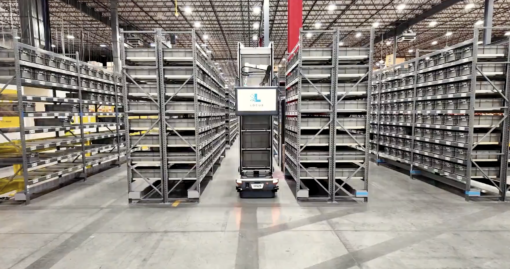
When an autonomous mobile robot encounters an obstacle, such as a pallet, congestion in an aisle, or a change in task priority, it can adjust in the moment. It reroutes, continues working, and maintains flow without requiring intervention.
At a basic level, an autonomous robot determines what action to take based on what it observes. In a warehouse, that ability directly impacts how consistently work moves through the operation.
Simply put, an autonomous robot is one that decides the action it should take on its own based on information it has perceived to increase productivity. If you would like to learn more about autonomous robots or their endless possible applications, contact us today. If you're unsure how robotics technology could help you, here are 8 great autonomous robot examples.
8 Applications of Autonomous Systems Robotics
As autonomous systems have evolved, their role has expanded well beyond simple transport. Today, they are used across a range of workflows to support more consistent, scalable operations.
Autonomous Mobile Robots for Logistics
One of the most common applications of autonomous mobile robots (AMRs) is material transport. Moving inventory across a warehouse or fulfillment center is labor-intensive and often involves significant walking time.
By handling these repetitive movements, robots help reduce travel time and allow associates to stay focused on productive tasks like picking and packing.
Mobile Autonomous Robots foreCommerce
eCommerce operations place unique demands on warehouses, with high order volumes, fast turnaround times, and constant variability in order profiles.
Autonomous robots support workflows such as:
- Sortation and consolidation
- Inventory movement and staging
Their flexibility allows operations to adjust quickly as demand shifts throughout the day.
AMRs for Warehousing
Modern warehouses are large, complex environments where maintaining flow is critical. Autonomous robots support core workflows such as:
- Moving inventory between zones
- Replenishment and restocking
- Assisting with picking and consolidation
A key capability is their ability to navigate open, dynamic spaces. Using sensors and mapping technology, they can operate safely alongside people while adjusting to changing conditions on the floor.
As these systems evolve, they are increasingly used across multiple workflows — not just a single task — helping coordinate activity across the operation.
AMRs and Mobile Manipulators for Manufacturing
Manufacturing environments benefit from flexibility as production needs shift.
Beyond transporting in-process parts and finished goods, AMRs integrated with accessories such as conveyors or robotic arms, can assist in the production process. For example, AMRs with robotic arms can sort, pick, and pack products with the added ability to dynamically move to multiple locations.
Static conveyors have long been used in line work, as they help speed up production and sorting. Adding a conveyor onto an AMR means that conveyor capabilities can now be flexible and mobile. AMRs with built-in conveyors can connect to static conveyors to move products more effectively throughout a facility.
AMRs with attachments that can lift loads and connect to carts allow the robots to load and unload payloads and, in some cases, connect to carts without human intervention. This combination of the cart transport and loading/unloading in one AMR is a relatively new capability, but one that will create more potential applications for autonomous robots.
AMRs for Data Centers
In data centers and secure facilities, autonomous robots are used to transport sensitive materials while maintaining strict chain-of-custody requirements.
They provide consistent, trackable movement of high-value assets while reducing manual handling.
AMRs in Healthcare
Healthcare facilities use autonomous robots to transport supplies, medications, and equipment throughout hospitals.
They are also used for sanitation, with systems equipped to disinfect spaces without exposing staff to unnecessary risk. These applications help improve efficiency while supporting safety protocols.
AMRs in Biotech
Biotech environments often require continuous monitoring and strict process control.
Autonomous robots assist with routine tasks such as sampling, material handling, and waste management. By taking on these repetitive workflows, they allow skilled workers to focus on analysis and decision-making.
AMRs for Research and Development
In research environments, autonomous robots are used to handle repetitive transport tasks and support experimentation.
They also serve as platforms for developing new technologies, such as advanced sensors and robotic manipulation systems, allowing teams to test and iterate more efficiently.
Crucial Components of Autonomous Robots
Autonomous robots operate through three core capabilities: perception, decision-making, and actuation.
Perception
Perception is how a robot understands its environment.
Using sensors such as LiDAR, cameras, and other detection systems, robots gather real-time data about their surroundings. This allows them to identify obstacles, navigate safely, and understand changes in the environment.
Decision-Making
Decision-making is how a robot determines what action to take.
Based on its programming and the data it receives, the robot evaluates conditions and selects the appropriate response. This can include adjusting routes, reprioritizing tasks, or stopping when a safety condition is triggered.
Modern systems make these decisions continuously, allowing them to respond in real time rather than follow a fixed sequence.
Actuation
Actuation is how a robot physically interacts with its environment.
Motors, wheels, and other mechanical components translate decisions into movement. Whether transporting inventory, lifting items, or navigating through a facility, actuation enables the robot to execute its tasks.
Autonomous mobile robots combine all three capabilities — perception, decision-making, and actuation — to operate within dynamic warehouse environments. By reducing unproductive travel and adapting to real-time conditions, they help maintain consistent flow and improve overall operational performance.
Autonomous robots have come a long way from simple, pre-programmed machines. Today, they play a much more active role in how warehouse operations run — adapting to real-time conditions, supporting multiple workflows, and helping maintain consistent performance across the floor.
As demand becomes less predictable and labor plans are harder to rely on, the ability to adjust in the moment has become just as important as raw throughput. Autonomous robots help bridge that gap by keeping work moving when conditions shift, whether that’s a sudden spike in orders, congestion in a pick zone, or a change in priorities mid-shift.
For warehouse operators, the question is no longer whether robots can automate a task. It’s whether they can help maintain flow across the entire operation day in and day out.
That’s what autonomy looks like in practice.
If you’re exploring how autonomous robots could fit into your operation, the next step is understanding where they can have the most immediate impact, whether that’s reducing travel time, improving pick consistency, or helping your team stay on plan during peak and beyond.
Interested? Let’s talk!


 Article