For 20+ years, LogiMAT has been one of Europe’s most important events for intralogistics and warehouse automation.
And in 2026, the conversation is evolving.
Warehouse automation decisions are entering a new phase, as leaders ask a more strategic question: ‘Which infrastructure and operational models can help me adapt, when conditions refuse to stay stable?’
The driver behind that change is uncertainty.
Unpredictability, demand volatility, SKU proliferation, labor variability, and constant pressure on fulfillment speed are exposing the limits of fixed automation. In that environment, systems designed around throughput assumptions or long-term forecasts struggle when operations shift faster than infrastructure can adapt.
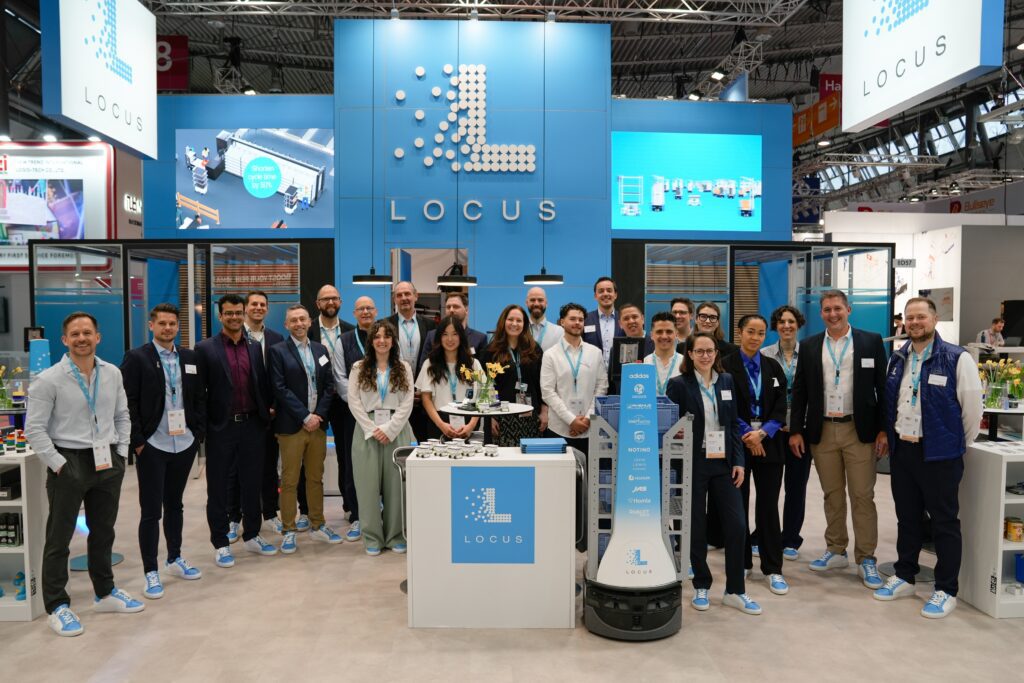
At LogiMAT 2026, Locus Robotics is demonstrating how adaptive fulfillment infrastructure addresses this shift, and helps operations maintain throughput, reduce travel, and scale capacity as fulfillment conditions evolve.
If you’re rethinking how to automate without locking into a 5–7 year infrastructure bet, we’ll be demonstrating our approach to adaptable fulfillment infrastructure.
Drop by the Booth:
- Hall 8, Stand 8D41
- Stuttgart Trade Fair Centre
- 24th-26th March 2026
We’ll walk through:
- Automation that scales without overbuilding for peak
- Throughput that isn’t dependent on labor availability
- Performance without facility redesign or infrastructure lock-in
- A model that adapts as your SKU mix, order profile, or strategy shifts
Whether you operate a brownfield site, a high-throughput DC, or multiple facilities across Europe, we can show you how to build automation designed to adapt and perform through volatility and growth.
Here are several highlights visitors can expect to see at the LogiMAT booth this year:
Person-to-Goods (P2G) & Robots‑to‑Goods (R2G) Automation in Action
Many warehouse automation systems depend on fixed infrastructure designed around specific throughput assumptions and facility layouts. These systems can perform well in stable environments but are harder to adjust when volumes, product mixes, or workflows shift.
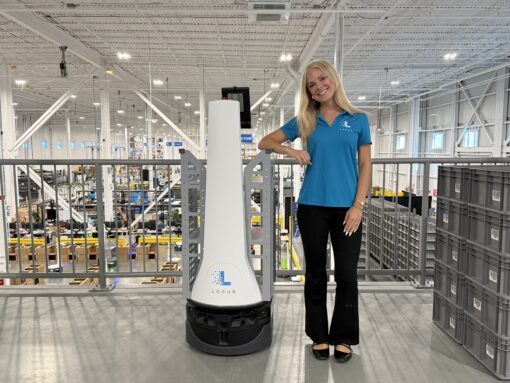
At LogiMAT, visitors will see live demonstrations of Locus robots supporting high‑throughput operations and adjusting assignments in real time as order profiles change. We can walk you through:
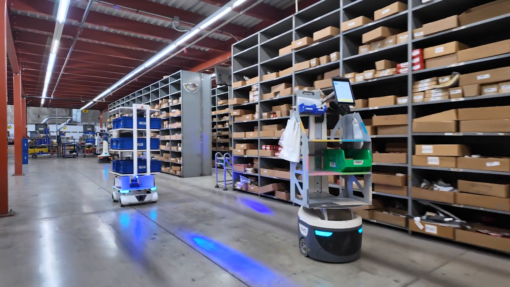
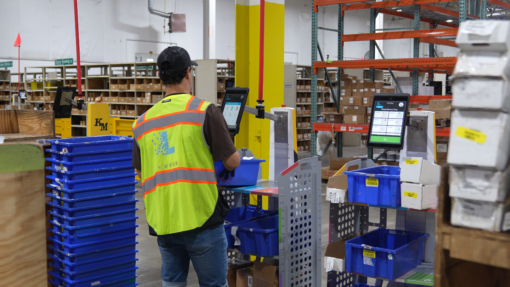
- Person-to-Goods (P2G) solutions, where robots move with associates, dynamically coordinating tasks across the facility to reduce walking and maintain continuous picking flow.
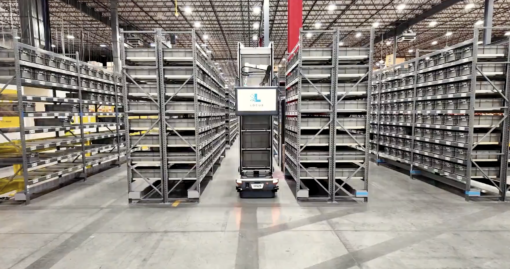
- Robots‑to‑Goods (R2G) solutions, where, instead of routing goods through fixed infrastructure, robots perform putaway, picking, inventory movement, and deplenishment within an automated zone. Instead of supporting a human through the workflow, the robot executes it. Capacity scales by adding robots, not fixed infrastructure.
Real‑Time Orchestration with LocusONE™
Automation systems only perform as well as the intelligence that coordinates them. At the center of the Locus solution is LocusONE, the orchestration system that manages robots, workflows, and labor in real time. Providing AI-driven intelligence, the platform continuously evaluates order priorities, inventory locations, and robot and human activity across the warehouse to determine how work should move through the facility.
At LogiMAT, visitors can see how this intelligent orchestration layer helps you keep pick, pack, and dock operations aligned so the floor continues running smoothly.
Automation Designed for Operational Volatility
Modern fulfillment increasingly operates under uncertainty. In this context, stable assumptions and rigid solutions start to present risk, and cannot adapt to changing needs.
At LogiMAT, the Locus team will demonstrate how adaptive fulfillment can help you maintain throughput when demand patterns shift, helping operations continue hitting productivity targets even during volatile periods.
Automation That Works in New and Existing Facilities
Most organizations evaluating automation are working with existing facilities that were not originally designed for robotics or extensive infrastructure systems. Rebuilding the building is rarely a realistic option.
At LogiMAT, the team can explore how Locus integrates into existing warehouse environments and adapts to current layouts without disruption.
Scaling Capacity Without Overbuilding for Peak
Adapting for peak demand remains one of the most difficult operational challenges in fulfillment.
Instead of committing to permanent infrastructure sized for peak, Locus’ Robots‑as‑a‑Service (RaaS) relationship offers a different approach; organizations can scale robot fleets as demand changes.
At LogiMAT, visitors can explore how this approach helps you to align automation capacity with actual operational conditions rather than long‑term forecasts — and without upfront CapEx.
See Adaptive Fulfillment Infrastructure at LogiMAT
Ready to discover adaptive fulfillment infrastructure that helps operations scale throughput, respond to volatile demand, and evolve workflows without the rigidity of fixed automation?
Visit the Locus team at LogiMAT 2026 (March 24–26) at Hall 8, Stand 8D41 at the Stuttgart Trade Fair Centre.
We’re ready to show you an automation model that’s designed for your reality!


 Article