Summary: Business intelligence (BI), artificial intelligence (AI), and warehouse automation technologies like autonomous mobile robots (AMRs) are transforming how warehouses operate. By combining real-time operational data with advanced analytics, warehouse managers can gain actionable insights that improve labor utilization, inventory management, workflow efficiency, and equipment reliability. Leveraging ERP systems, BI dashboards, and predictive analytics helps organizations make smarter, data-driven decisions that increase productivity, reduce costs, and enhance customer service. As warehouses become more automated, adopting a data-driven culture will be essential for maintaining operational excellence and competitive advantage.
Optimizing your warehouse operations is crucial for meeting ever-increasing customer demands and staying ahead of your competition. With the rise of flexible robotic automation like autonomous mobile robots (AMRs), you now have access to a wealth of real-time data that can drive operational improvements and strategic decision-making. By harnessing the power of AI and BI, warehouse managers like you are turning this data into actionable insights, unlocking new levels of efficiency and productivity.
For warehouse operations managers, there’s no time like the present to bring together business intelligence (BI) and automation to transform your warehouse. As artificial intelligence (AI) takes hold as the must-have buzzword across all industries, this powerful combination allows you to streamline processes and maximize efficiency like never before.
It All Starts with Your ERP
Warehouse optimization begins with your trusty Enterprise Resource Planning (ERP) system. This versatile tool dives deep into your inbound inventory data to guide you on optimizing product distribution and aisle layout. Using intel from the ERP, you can get smart about load scheduling and intentional product placement for faster putaway from the dock. It's like having an efficiency guru on staff that provides you with constant process improvements.
But BI takes it a step further by visualizing all of your data in live dashboards, reports, and analytics. This unprecedented visibility lets you monitor warehouse activities in real-time and quickly identify areas for improvement. From reallocating workers to rerouting workflows — you can make informed decisions on the fly to continuously optimize operations.
Of course, data is just numbers without the proper interpretation. This is where human ingenuity comes in. You've got to analyze those metrics and KPIs, read between the lines, and understand what they're really telling you. When you put on those smart analytics glasses, opportunities for maximizing efficiency jump off the screen.
Turn Data into Insights
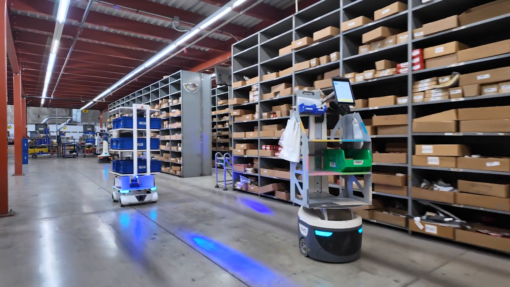
While automated systems generate vast amounts of data, this data is only valuable when it is transformed into actionable insights. This is where business intelligence and artificial intelligence tools come into play. Platforms like LocusHub provide advanced analytics and reporting capabilities, enabling you to visualize and analyze data in meaningful ways. Locus’s rich dashboards and reports enable everyone from front-line operators to executives to monitor in real-time and quickly act on the information they see, addressing issues before they become problems to keep your deployment operating successfully.
Maybe you need to rethink travel path efficiency and order consolidation based on your latest putaway data. Or perhaps your pick rates in certain areas are lagging and it makes sense to rebalance labor. The opportunities for incremental gains are endless when you've got BI and automation working as an integrated team.
With BI tools, managers can create customized dashboards and reports that provide real-time visibility into key performance indicators (KPIs), such as order throughput, pick rates, and labor productivity. These visual representations of data make it easier to identify trends, spot anomalies, and make data-driven decisions that drive operational improvements.
Additionally, these tools often incorporate predictive analytics capabilities, which use historical data and machine learning algorithms to forecast future scenarios. By leveraging these capabilities, warehouse managers can anticipate fluctuations in demand, staffing needs, and other factors, enabling them to optimize resource allocation and ensure seamless operations during peak periods.
4 Benefits of Data-Driven Decision Making
There are a number of benefits of data-driven decision-making for your warehouse. Here are a few real-world examples of how business intelligence combined with automation can drive operational improvements:
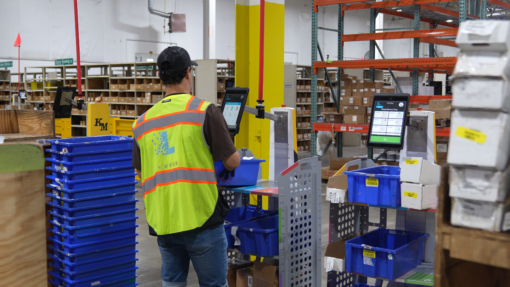
- Labor Optimization: By analyzing data on pick rates, travel paths, and dwell times, warehouses can identify areas where labor resources are being underutilized or overworked. This insight enables managers to optimize staffing levels, worker assignments, and break schedules, ensuring that labor is deployed efficiently and effectively without straining employees.
- Inventory Management: Automation and BI tools can provide real-time visibility into inventory levels and locations, enabling warehouses to proactively manage stock levels and minimize over- or under-stocking. Additionally, data-driven inventory management can help identify slow-moving or obsolete items, allowing you to optimize your product mix and reduce carrying costs.
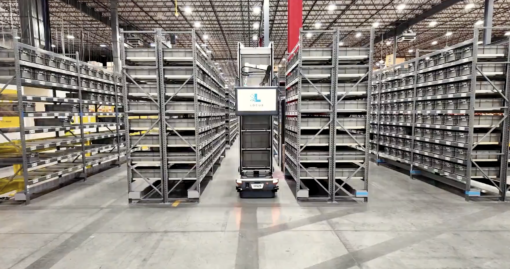
- Workflow Optimization: By analyzing data on order flows, bottlenecks, and process inefficiencies, you can identify opportunities to streamline workflows and optimize processes in your warehouse. This might involve reconfiguring pick paths, implementing cross-docking strategies, or leveraging vertical space with mezzanines and pick towers for improved throughput.
- Predictive Maintenance: AMRs and other automated systems generate data on equipment performance and utilization, which can be used to predict and prevent equipment failures. By implementing predictive maintenance strategies based on this data, warehouses can minimize downtime, reduce maintenance costs, and extend the lifespan of their equipment.
Embracing a Data-Driven Future
As the demand for efficient and agile warehouse operations continues to grow, the importance of data-driven decision-making will only increase. By leveraging the power of business intelligence and the data generated by AMRs and other automated systems, warehouses can gain a competitive edge, driving operational excellence and delivering exceptional customer service.
To fully embrace a data-driven future, warehouses must invest in the right BI tools and foster a culture of data-driven decision-making. This involves training employees on data analysis techniques, encouraging data-driven collaboration, and empowering managers to make decisions based on insights derived from data.
From optimizing labor utilization and inventory management to streamlining workflows and implementing predictive maintenance strategies, the benefits of data-driven decision-making are manifold. With business intelligence, managers can visualize KPIs and proactively address operational challenges, ensuring seamless operations and superior customer service.
As we navigate towards a data-driven future, it's imperative for warehouses to embrace this paradigm shift and invest in the right tools and training to enable a culture of data-driven decision-making.
Does your warehouse need advanced analytics and automation solutions tailored to meet your specific needs? Let’s talk!
Frequently Asked Questions
1) What is business intelligence in warehouse management?
Answer: Business intelligence (BI) helps warehouse managers collect, analyze, and visualize operational data to make informed decisions that improve efficiency, productivity, and overall performance.
2) How can warehouse automation improve operational efficiency?
Answer: Warehouse automation reduces manual tasks, increases accuracy, speeds up order fulfillment, and provides real-time data that helps optimize workflows and resource allocation.
3) What role do autonomous mobile robots (AMRs) play in data-driven warehouses?
Answer: AMRs automate material movement while generating valuable operational data that can be used to improve labor productivity, inventory management, and workflow efficiency.
4) How does predictive analytics benefit warehouse operations?
Answer: Predictive analytics uses historical and real-time data to forecast demand, staffing needs, and equipment maintenance requirements, helping warehouses avoid disruptions and improve planning.
5) What warehouse KPIs should managers monitor using BI tools?
Answer: Key performance indicators include order throughput, pick rates, labor productivity, inventory accuracy, equipment utilization, and order fulfillment speed.
6) How can data-driven decision-making reduce warehouse costs?
Answer: By identifying inefficiencies, optimizing labor allocation, reducing inventory carrying costs, and preventing equipment downtime, data-driven strategies help lower operational expenses.
7) Why is integrating BI with ERP systems important for warehouses?
Answer: ERP systems provide critical operational data, while BI tools transform that data into actionable insights, enabling better inventory management, workflow optimization, and strategic decision-making.



 Article