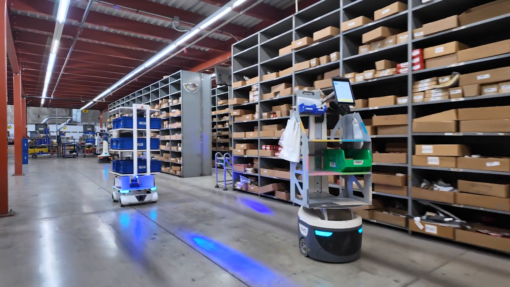
Many people still think of autonomous mobile robots (AMRs) as picking robots that are good for small and medium operations, built for each picking, and that’s about it. And that made sense five years ago. When Locus Robotics first entered the market, we were purposeful, and laser focused on each picking. It was an essential pain point we could solve well, and it set the foundation for everything that’s come since.
But AMRs today deliver value far beyond picking. They’ve evolved into intelligent, multi-purpose systems that are transforming nearly every area of warehouse operations from inbound to outbound, across many different environments and many different workstreams. Here are just a few of the ways they’re driving change:
- Non-Conveyables - Handling non-conveyables and heavy loads with safer, more efficient movement
- Returns - Closing the loop on returns through automated sortation and reverse logistics
- Mixed Pallet Picking - Supporting mixed each-and-case pallet picking for grocery, retail, and healthcare
- Chilled/Refrigerated Operations - Operating effectively in chilled and cold-chain environments for temperature-sensitive goods
- Conveyor Alternative - Replacing fixed conveyors with flexible, point-to-point transport
- High Velocity Picking - Accelerating workflows through Fast Pick for bulk and high-velocity items
- Pick Towers and More - Scaling seamlessly across mezzanines and 24/7 operations with orchestrated multi-bot fleets
The reality is that AMRs have matured. They’re no longer just tools for one task. They’ve become multi-purpose systems capable of handling a broad range of distribution and fulfillment workstreams. AMRs now enable Supply Chain Executives and warehouse operators to scale flexibly and responsively to achieve operational confidence in a world of uncertainty.
Picking and Moving the Unmovable: Non-Conveyables and Heavy Loads
Ask any warehouse associate about picking or handling oversized or awkward items, and they’ll tell you that it’s hard work. Traditionally, it meant dragging carts or using forklifts to move large or irregular products. That’s not just inefficient; it’s physically demanding and often unsafe in tight or congested spaces.
With AMRs like Locus Vector, that’s changing. Locus Vector is engineered for heavier, bulkier payloads to handle both point-to-point transport and integrated picking workflows. It can pick and move non-conveyables efficiently and safely, combining transport, staging, and picking functions in a single, orchestrated workflow. This makes it ideal for heavy industrial components, large sporting goods, bulky cartons and similarly weight and dimensionally challenging SKUs that still require picking precision.
Closing the Loop: Returns Sortation and Reverse Logistics
Returns are a reality of every retail and e-commerce business, but they’re also one of the least efficient processes inside the warehouse. The work is tedious, space-intensive, and disruptive to normal fulfillment flows. And because returns processing often requires two to three times more labor than standard outbound workflows (see Optoro’s report, "3PL Returns Management Playbook: Creating a Center of Excellence,"), even a modest increase in volume can strain capacity and slow down the rest of the operation.
At nGroup, we’ve shown how AMRs can automate the sortation process itself. Instead of relying on manual carts or fixed sortation lines, Locus Origin robots dynamically route returns to the correct station or location. Before Locus Robotics, nGroup had a baseline of 124 lines per hour (LPH) and now, nGroup has an average of 285 LPH, which is a 229% increase in productivity. They also now achieve close to 1 million units putaway each month. That’s faster, more accurate, and easily scalable during peak periods.
In other operations, Locus Origin robots help return items directly to inventory locations, closing the loop between outbound and inbound processes. When a resellable item can be inspected, rebagged, and reshelved immediately, it eliminates the need for a dedicated returns area, freeing up valuable space and time.
Reverse logistics doesn’t have to be a bottleneck, as the same robots that help to ship things out can also be used to create efficiencies when items come back.
Smarter Pallets: Mixed Each and Case Picking
Some of the most interesting AMR use cases today are happening where speed meets complexity — in mixed-pallet picking. These workflows combine case and each picking in the same operation, building pallets that contain a precise mix of products bound for specific destinations.
Take a food fulfillment operation in Madrid, for example. The team serves wholesale Hotel, Restaurant, and Catering (HoReCa) stores across Spain, managing thousands of route-specific orders where accuracy and timing are critical. Using more than 120 Locus Origin robots, they more than doubled productivity (from 50 to 110 lines per hour) while maintaining safety in narrow aisles.
And with Locus Robotics’ multi-drop off capability, those robots now deliver totes destined for different stores directly to their pallet locations to eliminate an entire sortation step and enable precise route consolidation.
For heavier or bulkier workflows, Locus Vector extends that flexibility to the picking and transport of cases or full totes between pick zones and dock doors. Together, Locus Origin and Locus Vector create a mixed-mode operation that combines precision with throughput, whether in grocery, healthcare, or high-volume retail distribution.
Automation That Thrives in the Cold Chain
Cold-chain environments impose strict operational considerations from condensation and frost to strict regulatory standards and product integrity requirements. Yet automation and warehouse orchestration with LocusONE™ is finding its stride there, too. Multiple Locus Robotics customers working in and through chilled and cold chain environments have improved throughput, accuracy, and compliance while reducing manual touches in this highly regulated space.
The robots operate reliably within chilled environments for both food and healthcare customers and maintain productivity where human labor can be limited. Associates spend less time traveling across temperature zones and more time on quality and oversight to drive consistency even at chilled temperatures.
Cold-chain automation isn’t just about surviving extreme conditions; it’s about thriving in them. AMRs are now enabling continuous fulfillment in spaces once considered too challenging for robotics to keep critical goods moving quickly, safely, and compliantly from dock to delivery.
Beyond Conveyors: Outbound Parcel Sortation and Point-to-Point Transport
Fixed conveyor systems have long been a go-to for high-volume outbound sortation. But they’re rigid, expensive, and take up valuable floor space. As fulfillment models become more dynamic, warehouses need alternatives that can flex with changing demand.
Locus AMRs offer a flexible alternative that eliminates the limitations of conveyors by providing point-to-point transport and delivery for all types of payloads and not just for large loads. Locus Origin, with its small, nimble design, can efficiently perform deliveries between zones or directly to dock doors for shipping to navigate areas that can’t otherwise be reached. Meanwhile, Locus Vector handles heavier parcels and cases to create a fluid, end-to-end material flow.
Together, this orchestrated flexibility allows facilities to eliminate static conveyors while maintaining continuous, high-velocity product movement.
Fast Pick and the Future of Fulfillment
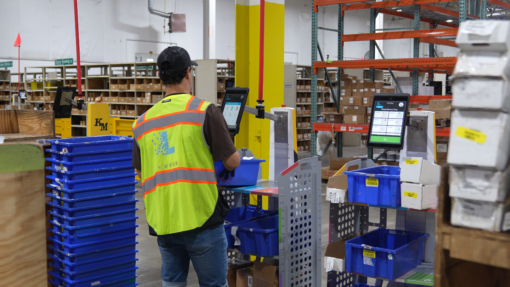
Even in traditional Person-to-Goods (P2G) workflows, innovation hasn’t stopped. Locus Fast Pick shows just how far P2G automation can go by giving associates the ability to pick faster, more efficiently, and with less movement.
Locus Fast Pick allows multiple robots to approach a stationary associate, enabling bulk or high-velocity picks directly from pallets, gaylords, or bulk storage without the need for decanting or additional steps. The result is a dramatic boost in throughput: one associate working with multiple robots can pick 300–400 lines per hour, all without complex fixed infrastructure.
For warehouses managing flash sales, seasonal spikes, or viral product surges, Locus Fast Pick bridges the gap between P2G and the high throughput of Goods-to-Person (G2P) systems but with far greater flexibility. It’s built for speed, simplicity, and scalability, giving warehouses a way to adjust instantly to changing SKU velocity or demand.
Operating at Scale in a Time of Supply Chain Uncertainty
Warehouses today need automation that both works and scales intelligently, and our customers have proven what that looks like in the real world.
- Grow from Small to Large Fleets
What starts as a modest few dozen robots can quickly scale to fleets of 500+ Locus Robots that operate 24/7 and deliver over 100,000 units per day. Each robot is orchestrated through LocusONE™ to ensure that productivity remains consistent even as volume surges. This level of scalability is achieved without additional fixed infrastructure to keep operations flexible and efficient as they expand. - Optimize Vertical Space
Modern fulfillment centers are increasingly designed for vertical storage and Locus Robotics AMRs seamlessly operate across multi-level mezzanines to maintain throughput and safety in environments optimized for high-density storage. The ability to navigate complex vertical layouts unlocks additional capacity without the need for new buildings or major retrofits. AMRs can drive additional return on previous mezzanine and pick tower investments. - Scale for Peak with Ease
Traditional automation struggles to flex for short-term surges. Locus Robotics’ customers, however, can scale up and down for peak seasons effortlessly through the Robots-as-a-Service (RaaS) model. Additional robots are deployed as order volumes rise and returned once demand normalizes to keep throughput high and costs predictable.
Together, these capabilities enable Locus Robotics-powered warehouses to operate at enterprise scale with the agility of a startup to sustain 24/7 performance, expand capacity vertically, and flex seamlessly for every season.
A Certain Investment Today for an Uncertain Tomorrow.
When we first started, we focused on one thing and did it well. That foundation — the relationships, the reliability, the results — gave us the credibility to grow. But as warehouses and the supply chains they support have evolved, so, too, have their challenges.
Today, we’re helping customers move toward an even more powerful vision with Robots-to-Goods (R2G) fulfillment. With LocusONE™, warehouses now manage an integrated fleet, from Locus Origin for high velocity each picking, to Locus Vector for heavy payload transport, and now Locus Array, the newest addition to the family.
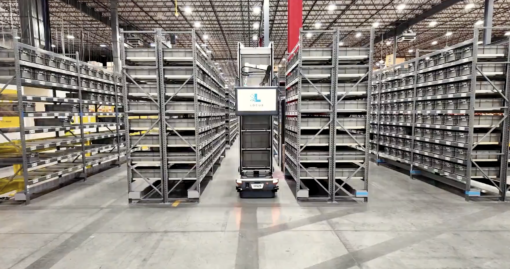
Locus Array is the first AMR designed for autonomous in-aisle picking, dual-sided order completion, and continuous 24/7 operation. Array brings the “goods” directly to the robot, dynamically adjusting to order mix and optimizing density by up to 100%.
With Origin, Vector, and Array working as a single orchestrated fleet, Locus Robotics now delivers a complete automation ecosystem that scales across every workflow, every facility, and every future fulfillment challenge.
Author Bio:
Al Dekin's 30 years of sales and leadership experience have positioned the Locus Robotics Sales group as trusted collaborators in the success of our customers. With extensive experience in the warehouse, logistics and robotics verticals, Dekin prides himself on building long-lasting fulfillment partnerships with a wide range of companies and brands, from local operators to Fortune 500 brands with dozens of global facilities. Dekin exemplifies Locus Robotics’ focus on deploying fulfillment solutions that solve real problems in real warehouses and working with our partners on their continued success long after the initial sale is made.


 Article