For years, manual warehouse operations have been treated as the default because they’re familiar, adaptable on the surface, and often perceived as lower risk than automation. But as warehouse fulfillment moves deeper into 2026, that assumption is becoming harder to defend.
Warehouse uncertainty is no longer an occasional disruption that happens due to a social sale or peak season. It’s become a structural issue as order volumes fluctuate week to week, SKU profiles expand and contract constantly, and labor availability changes by shift. Across conversations on the “Warehouse Automation Matters” podcast, one pattern surfaced repeatedly that manual operations are quietly losing reliability as they become harder to manage, harder to scale, and harder to trust.
The true cost of staying manual isn’t just financial. It’s the erosion of operational confidence — and that cost compounds over time. Across more than 400 global deployments, Locus Robotics has seen this pattern repeat as manual warehouses struggle to maintain predictable performance under structural volatility.
Manual Labor is a Variable and Not a Foundation
Manual warehouses scale primarily through people, and as volume rises, so does walking, lifting, and repetition. That’s where instability takes hold.
When KSP Fulfillment joined the podcast, Michael Geiger described the challenge of sustaining throughput as volumes climbed while labor availability remained inconsistent. The issue wasn’t simply hiring cost. It was the constant effort required to stabilize performance as teams changed. Every new associate introduced variability, even with strong training programs.
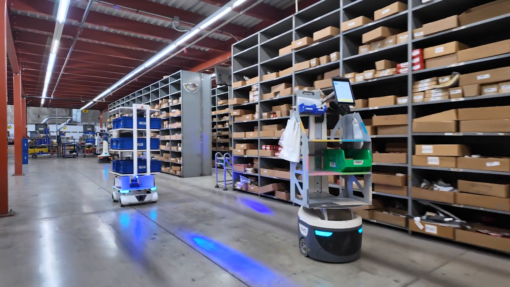
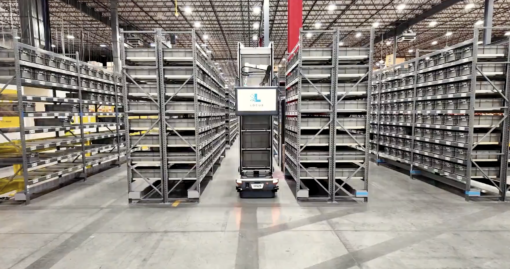
A similar dynamic emerged at Staples Canada. Early automation workflows exposed how much labor capacity was consumed by travel rather than value-added work. Once autonomous mobile robots (AMRs) from Locus Robotics absorbed transport, throughput stabilized — even as staffing levels fluctuated. Solutions such as Locus Origin and Locus Vector remove non-value-added travel while stabilizing task sequencing across workflows.
The cost here isn’t just wages. It’s the management overhead, the ramp-up time, and the planning risk that emerges when labor becomes the primary control lever for performance.
Errors Multiply as Complexity Grows
Manual processes struggle as complexity increases — and complexity is now the baseline.
When David Welsh of Radial was on the “Warehouse Automation Matters” podcast, he spoke candidly about how omnichannel fulfillment introduced new failure points: split orders, compressed cutoffs, and varied service-level agreements across customers. In manual environments, those variables amplify error rates and rework.
Several podcast guests noted that inventory accuracy problems weren’t driven by lack of effort. They were driven by systems that relied on memory, paper workflows, or static slotting in an environment that no longer stays still.
When automation was paired with real-time orchestration through the LocusONE™ platform, that burden shifted from individuals to systems. Accuracy improved not because people worked harder, but because workflows guided decisions consistently. That shift matters because it replaces hope with predictability.
Space Gets Expensive Faster Than Expected
Manual warehouses often run out of usable space long before they run out of demand.
At Conectiv Supply Chain Solutions, Kevin Sullivan described on the podcast how facility constraints surfaced as customer profiles diversified. Wide aisles, cart staging, and buffer zones consumed capacity that couldn’t easily be reclaimed without disruption.
Rather than expanding prematurely, warehouse automation from Locus Robotics enabled them to rethink how space was used to tighten layouts, increase pick density, and extend the productive life of existing facilities.
The hidden cost of manual space usage isn’t just rent. It’s inflexibility and once space becomes the constraint, every growth decision becomes harder.
Safety Carries Long-Term Operational Costs
Transport-heavy manual environments increase fatigue and injury risk. While direct injury costs are visible, the indirect costs are harder to quantify and include lost experience, lower morale, and slower onboarding as teams compensate.
At Motivational Fulfillment & Logistics Services, Tony Altman emphasized on a podcast episode how reducing travel and physical strain had a noticeable impact on retention and consistency. When people felt safer, performance stabilized.
In this context, safety wasn’t a compliance exercise. It was an operational advantage that reinforced reliability over time.
Manual Scaling Breaks Under Ever-Peak Demand
One of the most striking shifts in warehouse automation is the disappearance of predictable peaks.
At scale3PL, Adam Lawicki described an environment where “July looks like November” on an episode of “Warehouse Automation Matters”. He added that manual systems that once relied on temporary labor and overtime now struggle under constant demand.
Automation introduced elasticity as output scaled without proportional increases in headcount, while orchestration balanced workloads in real time. The result wasn’t just efficiency. It was confidence that operations wouldn’t fracture under pressure.
This is precisely where flexibility-first automation shifts the cost curve — enabling throughput to scale without destabilizing labor, space, or service levels.
How Automation Changes the Cost Curve
Across industries, automation reframed costs from reactive to controllable.
Warehouses that adopted AMRs consistently saw:
- More predictable throughput despite labor variability
- Higher accuracy driven by system-level controls
- Better space utilization without facility expansion
- Safer environments that support retention and stability
- The ability to absorb growth and peaks without operational chaos
Platforms like Locus Robotics shifted the role of leadership from firefighting to warehouse orchestration to handle complexity with intent rather than urgency.
Looking Ahead in Warehouse Automation
Manual operations rarely collapse overnight. They quietly constrain growth.
As fulfillment continues to evolve, the cost of staying manual becomes less visible but more consequential. It shows up in missed opportunities, delayed expansion, and teams stretched thin trying to hold performance together.
The question warehouse leaders face isn’t whether manual processes still function.
It’s whether they can deliver the operational confidence required to scale — reliably — in a world defined by constant change.
What Warehouse Leaders Can Do Next
Operational confidence doesn’t come from working harder inside manual constraints. It comes from designing operations that can absorb uncertainty without breaking.
As volumes fluctuate, labor availability shifts, and fulfillment grows more complex, warehouse leaders need systems built for constant change — not static assumptions. Flexibility-first automation gives operations the ability to scale throughput, stabilize performance, and start each day knowing what capacity and risk lie ahead.
If you’re evaluating how your operation will perform in 2026 and beyond, now is the time to step back and assess whether your current model is delivering confidence — or quietly eroding it.
Learn how Locus Robotics helps warehouses operate and outperform in an uncertain world through flexibility-first automation designed for scale, resilience, and continuous improvement.


 Article