If 2025 was the year warehouse automation matured, 2026 is the year it expands its reach. The conversation has shifted from why warehouses should use warehouse automation to how to orchestrate it across sites, how to manage both people and robots as one workforce, and how to keep fulfillment operations flexible when every day feels like peak.
Across dozens of discussions on the “Warehouse Automation Matters” podcast, industry leaders from Radial, Staples Canada, KSP Fulfillment, Conectiv, Motivational Fulfillment & Logistics Services, scale3PL, nGroup, North Bay Distribution, and Datex outlined what the next wave of warehouse automation will bring. Their experiences reveal a clear direction for 2026 of intelligent orchestration, deeper human-robot collaboration, and smarter use of data at every decision point.
Here are the top warehouse automation trends that will shape the year ahead.
Warehouse Orchestration Moves from Platform to Performance Strategy
In 2025, warehouse orchestration proved its value and in 2026, it will become indispensable. Warehouse leaders are no longer treating orchestration as a technical feature but as the foundation for managing distributed networks.
As the only solution offering real-time orchestration across multi-node networks, Locus Robotics sets the benchmark for adaptive fulfillment. With LocusONE™, fulfillment teams now coordinate labor, robots, and workflows through a single intelligence layer that balances work across sites in real time. The next step is using that same data for predictive adjustments to forecast congestion before it occurs, shift capacity automatically, and create a continuous feedback loop between demand and deployment.
Trend to Watch: Orchestration will evolve from visibility to foresight, and the smartest operations will use it to predict, not just react.
Robots-to-Goods (R2G) Becomes a Reality
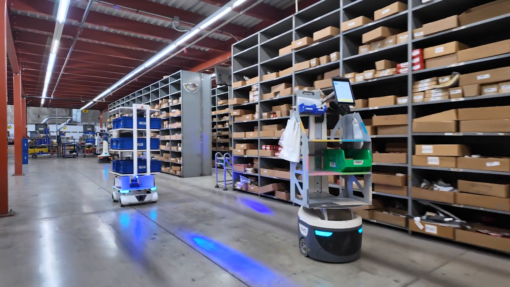
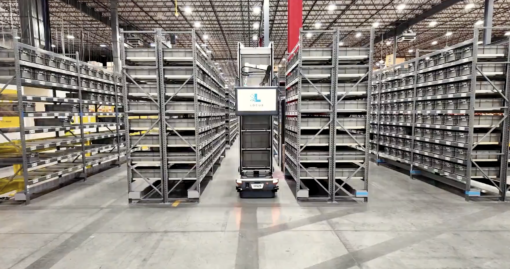
Person-to-Goods (P2G) automation revolutionized picking and in 2026, Robots-to-Goods (R2G) will redefine how inventory moves throughout the warehouse. With Locus Array, autonomous robots will handle transport between zones, replenishment, and returns — functions that still consume a significant share of labor time.
By connecting R2G with P2G systems such as Locus Origin and Locus Vector, warehouses will achieve end-to-end automation flow where goods move continuously from storage to packing without manual transport. The benefit isn’t just speed but balance with humans and robots working where each performs best.
Trend to Watch: R2G will extend warehouse automation beyond picking to create fulfillment networks that operate as cohesive systems rather than isolated zones.
Data Takes the Driver’s Seat
Every leader interviewed last year emphasized the same truth that data design precedes successful automation and in 2026, that practice becomes universal. Warehouse planners will use AI-driven modeling to simulate pick paths, zone layouts, and mission timing before physical implementation.
Conectiv’s Kevin Sullivan described on an episode of “Warehouse Automation Matters” how his team already uses onboarding data like SKUs, order profiles, and delivery patterns to design workflows before robots arrive. The next phase will integrate predictive analytics, allowing warehouses to reconfigure themselves based on real-time demand and product mix.
Trend to Watch: Data will stop being retrospective and will become the blueprint for every operational decision.
Flexibility Becomes the Hardest Metric
In 2026, flexibility overtakes efficiency as the benchmark for success and scale3PL’s Adam Lawicki has already seen this shift. His team measures productivity not by static rates but by how quickly systems adapt to changing volumes and customer needs.
For many leaders, flexibility will now be quantified, so expect to see KPIs like time to reconfiguration or labor redeployment speed appear on dashboards. Robotics partners like Locus Robotics are responding by making their platforms more modular to allow new workflows to be added without re-engineering the entire system.
Trend to Watch: Flexibility becomes measurable. The most agile operations will make adaptation a core performance indicator.
AI Moves from Buzzword to Backbone
Artificial intelligence has powered planning tools for years, but in 2026, it starts managing real-time decision-making inside the warehouse. AI-driven orchestration will allocate missions based on live variables like congestion, worker availability, and battery levels.
At Datex, Bryan Batchelder and Dave Castanon described on an episode of “Warehouse Automation Matters” how LocusONE and Datex Studio integrate data from more than 100 robots at EVERSANA to create adaptive workflows within a highly regulated environment. As AI models become more autonomous, those decisions will happen in milliseconds.
Trend to Watch: AI transitions from insight engine to operational co-pilot to guide both human and robotic performance.
Human-Robot Collaboration Gets More Specialized
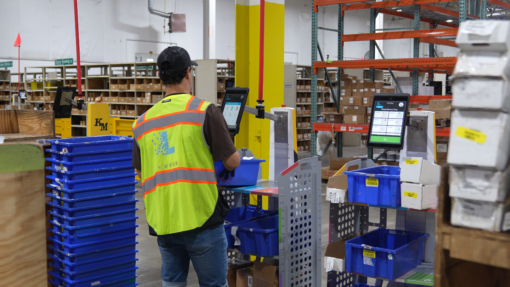
As automation expands, collaboration between people and robots becomes more intentional. Leaders like Mert Selcuk of Staples Canada have demonstrated how cross-functional planning between operations, IT, and engineering ensures robots complement human work instead of duplicating it.
In 2026, expect to see roles evolve around this collaboration as associates will become workflow coordinators who manage multi-robot fleets. Supervisors will oversee orchestration dashboards; not clipboards and training programs will shift from procedural to analytical to help workers interpret performance data and optimize routes.
Trend to Watch: Collaboration becomes specialization, and new roles will emerge at the intersection of technology, logistics, and human insight.
Reverse Logistics Goes Automated
Returns volume continues to grow, especially in e-commerce. Conectiv, nGroup, and several retail and 3PL clients are already automating reverse flows using Locus Robotics AMRs, which adapt to unpredictable return types and irregular packaging.
In 2026, we’ll see more automation on the inbound side with sorting, inspection, and re-slotting powered by data from the outbound process. Reverse logistics will move from reactive processing to proactive resource planning.
Trend to Watch: Returns become part of the fulfillment strategy, not an exception to it.
Sustainability Drives System Design
Efficiency has always been a cost conversation, but in 2026 it becomes an environmental one as more companies track the carbon impact of every fulfillment action. Locus Robotics customers have already seen reductions in walking distance and travel time of up to 80 percent, translating directly to energy savings and lower emissions.
With new reporting requirements and customer expectations, sustainability will influence warehouse design, packaging automation, and even robot routing with orchestration platforms optimizing for the lowest environmental footprint.
Trend to Watch: Efficiency and sustainability converge. The greenest warehouses will also be the most productive.
Multi-Node Networks Become the New Standard
Network design once revolved around a single flagship DC and in 2026, fulfillment will spread across smaller, strategically located nodes that act as one coordinated network.
North Bay Distribution’s Chris Caouette has already demonstrated how flexible node design can reach 95 percent of the U.S. population within two to three days using ground shipping. Orchestrated automation will allow networks like this to behave as one system, sharing labor and capacity virtually through LocusONE™.
Trend to Watch: The future is decentralized as multi-node networks will deliver both resilience and responsiveness.
Continuous Improvement Becomes a Cultural Imperative
The most successful automation programs now treat improvement as a rhythm rather than a project. Motivational Fulfillment’s Tony Altman built that mindset into daily operations, where associates use robot data to suggest route or workflow refinements that management implements weekly.
As Altman says, “Continuous improvement isn’t a department. It’s a mindset.” In 2026, that mindset will extend beyond the warehouse floor to leadership strategy, vendor relationships, and even customer engagement.
Trend to Watch: Improvement becomes embedded in culture. The best operations will evolve faster than the challenges around them.
If 2025 was about proving automation’s value, 2026 is about expanding its reach and deepening its intelligence. From R2G systems and predictive orchestration to flexible multi-node networks, the industry is moving toward fully adaptive fulfillment that is powered by data, AI, and human insight.
The warehouses leading that change will share one trait in that they’ll design for movement, not maintenance. As automation becomes more connected and collaborative, fulfillment will transform from a series of transactions into a continuous, learning ecosystem.
Listen to the full episodes of Warehouse Automation Matters for more expert perspectives on how warehouse automation is evolving in 2026.


 Article