Inventory confidence is built on trust that the system reflects reality on the warehouse floor, and not a delayed or idealized version of it.
Across conversations on the Locus Robotics’ “Warehouse Automation Matters” podcast over the past two years, warehouse leaders rarely describe inventory accuracy as a static metric. Instead, they talk about confidence in the form of available-to-promise numbers, replenishment signals, and that returned inventory is handled quickly, visibly, and correctly.
Returns sit squarely at the center of that trust.
As return rates continue to challenge retailers and fulfillment operations, the ability to believe the numbers — not hope they are right — has become a differentiator. According to forecasting from the National Retail Federation and Happy Returns, retailers expect returns to total roughly 15.8 percent of all merchandise in 2025, consistent with 2024 levels that reached $890 billion in returned goods. That scale makes returns a structural force that shapes your warehouse inventory reliability.
The state of returns is a reality that modern warehouse operations must design around.
Returns Are Where Inventory Confidence Breaks First
Returns introduce ambiguity immediately.
- When will it be available again?
Until those questions are answered, inventory exists in a gray zone of being physically present, but operationally uncertain. When reverse logistics is manual or disconnected, inventory data inevitably lags reality. Leaders across both retail and 3PL environments described on the podcast how returned items sitting in cages, carts, or temporary staging areas quietly distorted on-hand counts and planning assumptions.
At scale3PL, VP of Strategy Adam Lawicki noted on an episode of “Warehouse Automation Matters” that unmanaged exceptions create uncertainty not just for warehouse teams, but for customer commitments as well. When returns were delayed or invisible, confidence in inventory eroded quickly and that erosion didn’t stay contained to reverse logistics. It affected outbound promises, replenishment decisions, and SLA confidence across the network.
As return volumes grow, those warehouse blind spots compound. LocusONE orchestrates returns in real time to help remove those blind spots in a warehouse.
Confidence Comes from Knowing How the System Responds
Operational Confidence isn’t about eliminating variability. It’s about trusting how your warehouse operations behave when variability shows up.
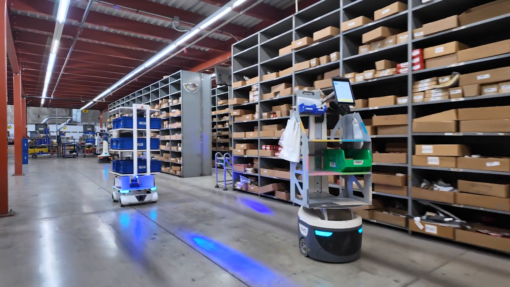
That distinction surfaced clearly in conversations with Dental City, where leaders described adapting to volume swings in real time using autonomous mobile robots (AMRs) from Locus Robotics:
“If we have significant spikes during the day, we’re able to adapt to that with our robotics.”
That statement captures a broader truth echoed across industries that confidence doesn’t come from fewer returns. It comes from knowing exactly how the system will absorb them without cascading disruption or manual intervention.
A slow or opaque returns process becomes a drag on your warehouse's accuracy, visibility, and decision-making, while a predictable response, even in the face of variability, restores trust.
Accuracy Is a System Outcome, not a Heroic Effort
Inventory accuracy has long been a goal. But when returns aren’t integrated into order flow and inventory systems, accuracy becomes aspirational at best and misleading at worst.
High return rates — particularly in eCommerce categories where online returns can approach one in five purchases, according to Supply & Demand Chain Executive — mean a constant stream of items requiring inspection and reintegration. If those items aren’t visible and managed through the same orchestration layer that governs outbound work, inventory numbers inevitably fall behind reality.
When that happens, accuracy depends on individual vigilance — memory, workarounds, and delayed updates. That approach doesn’t scale.
As Kevin Sullivan of Conectiv put it when describing their operating philosophy on a recent podcast episode: “Flexibility was just inherent in everything that we did.”
That flexibility applies directly to returns. Systems that are designed to flex by rerouting work, reprioritizing tasks, and updating inventory states in real time create confidence without heroics.
The Downstream Cost of Inventory Uncertainty
Inventory uncertainty doesn’t stay confined to the warehouse, as leaders described ripple effects that extend across the organization:
- Planners increase safety stock to compensate for unclear availability
- Forecasting accuracy declines
- Sales teams hesitate to commit inventory
- Customers experience inconsistency, stockouts, or double shipments
Each of these outcomes weakens operational confidence, and inventory uncertainty is often rooted in manual reverse‑logistics workflows, which reinforces the need for automation. As partners at Peak Technologies emphasized on a podcast episode, accuracy failures undermine trust long before they show up as missed KPIs or quarterly results.
In this way, reverse logistics becomes a leadership issue, not just an operational one.
Reverse Logistics as an Operational Confidence Multiplier
Returns test whether systems are designed for reality as it exists today.
When reverse logistics is orchestrated to be visible, prioritized, and integrated, returned items stop behaving like exceptions and start behaving like managed flow. Disposition decisions are captured in real time. Inventory states update quickly. Forecasts reflect reality instead of lagging behind it.
This is where reverse logistics shifts from being a drag on operational warehouse confidence to a builder of it.
Handled well, returns don’t undermine trust in inventory. They reinforce it.
Returns and Operational Confidence
Warehouses don’t achieve Operational Confidence by controlling every variable. They achieve it by designing systems that respond predictably when variables change, and returns are one of the clearest tests of that design.
In an always-on fulfillment environment, inventory confidence depends on how quickly and predictably your operation responds when returns enter the system.
If reverse logistics is creating uncertainty in inventory accuracy, available-to-promise commitments, or planning decisions, connect with Locus Robotics to see how LocusONE orchestration and our full AMR fleet transform reverse logistics into a driver of Operational Confidence.


 Article