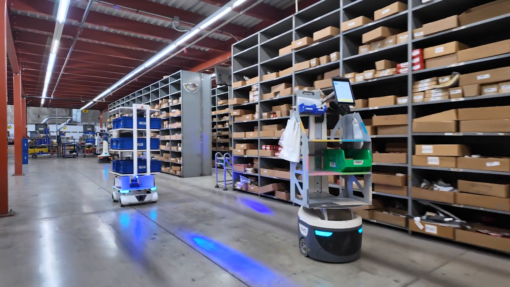
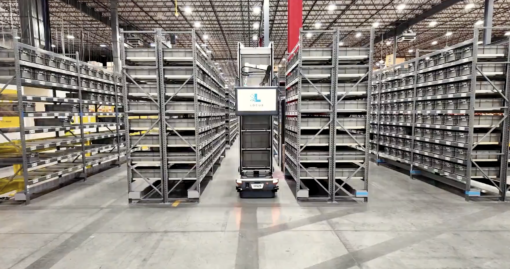
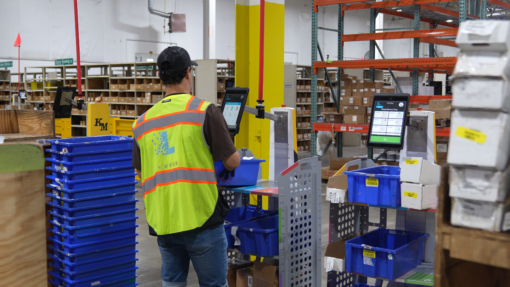
In most automation stories, the spotlight shines on technology, and robots, sensors, and dashboards tend to dominate the conversation. But at Staples Canada, the true success of automation was measured in people, as well as throughput or speed. The company’s transition to robotics transformed not only how orders moved through the building, but how associates felt about their work.
When Locus Robotics’ autonomous mobile robots (AMRs) first arrived at Staples Canada’s 140,000-square-foot Vancouver fulfillment center, expectations centered on efficiency. The team anticipated faster picking, better accuracy, and smoother peak performance, but what they didn’t anticipate was how profoundly the change would affect the daily experience of the people on the floor.
A Safer, Healthier Workplace with Warehouse Automation
Before the facility was automated with flexibility-first AMRs, they relied on aging conveyors and manual material movement. Associates spent their shifts walking long distances, pushing heavy carts, and navigating narrow aisles filled with noise and dust. “It was hot, dusty, and physically demanding,” said one long-time associate. “By the end of the day, you really felt it.”
After the transition to robotics, that environment changed overnight as AMRs took on the heavy transport and repetitive travel that once caused strain and fatigue. The warehouse became noticeably quieter and cooler; the air quality improved; and safety also improved.
“Since deploying Locus Robotics AMRs, we’ve had zero safety incidents,” said Ash Van Schelven, Regional FC Manager. “The robots handle all the movement between zones, so associates don’t have to lift or push anything heavy. It’s made a huge difference in how people feel about coming to work.”
Empowering People, Not Replacing Them
Automation can sometimes be misunderstood as a threat to jobs. Staples Canada’s experience proved the opposite as from the beginning, leadership positioned robotics as a collaborative tool that was designed to make work easier and not eliminate it.
Mert Selcuk, Senior Manager of Supply Chain Strategy and Capabilities, emphasized that perspective during his appearance on the Warehouse Automation Matters podcast. “Automation is not magic — it’s only as successful as your operations team allows it to be,” he said. “We made sure associates were part of the design from the beginning.”
With Locus Robotics’ flexibility-first approach, automation adapts to your workforce, not the other way around. That inclusiveness paid off when associates who helped test early workflows later became internal champions, training others and fine-tuning the daily rhythm of work. Instead of resistance, the rollout generated curiosity and pride.
The Human ROI
The most telling feedback came not from data dashboards but from employee conversations. “The bot has changed my life a lot,” said Parmpreet Kaur, a picker at Staples Canada. “We don’t have to carry anything in our hands. We can concentrate more on our pickings.”
This comment captured what automation done right really delivers, which is relief from physical strain and the chance to focus on higher-value work. Productivity metrics tell the same story as Staples nearly doubled its units per hour (42 to 82 UPH) and reduced the average shift time from 13 hours to 8. These gains demonstrate how Locus Robotics solutions scale without sacrificing workforce wellbeing, and those results came without burnout or turnover.
In fact, retention improved as workers were less fatigued, injuries disappeared, and morale grew stronger. “It’s night and day,” Van Schelven said. “People are happier, more engaged, and they take real ownership of their zones.”
Culture as a Competitive Advantage
Warehouse operations often focus on mechanical throughput, but culture has become just as critical to long-term performance. Facilities with high turnover face constant onboarding and training costs, eroding the benefits of any efficiency gain. Staples’ approach flipped that dynamic. By prioritizing employee wellbeing, the company created a workforce that performs better because it wants to stay.
Leadership understood that robotics alone wouldn’t solve labor challenges, but human trust would. By inviting employees to co-create workflows and provide feedback, Staples embedded collaboration into the culture, and the robots became partners.
That shift was visible even in language as associates began referring to the AMRs as part of the team. Managers noticed fewer absentee days and faster adaptation to new processes. In every measurable way, including safety, productivity, and retention, the human experience became a driver of operational success.
The Broader Implications
Across the logistics sector, companies are realizing that sustainability is human as well as environmental. Retaining experienced warehouse staff is increasingly difficult, and burnout remains one of the top reasons for turnover. Automation that lightens workloads and improves ergonomics isn’t just a technical upgrade; it’s a business strategy.
For Staples Canada, human-centered automation now serves as a foundation for future innovation. Because the workforce trusts the technology, the company can introduce new workflows and scaling initiatives faster. The same collaboration that powered the first deployment now fuels continuous improvement.
Lessons for the Industry
Three takeaways emerge from Staples Canada’s experience:
- Start with empathy. The best automation strategies begin with understanding how people work and what slows them down.
- Include associates in design. Early input reduces friction and accelerates adoption.
- Measure human impact alongside operational results. Retention, satisfaction, and safety are just as critical as throughput.
As warehouses across North America face mounting labor shortages, these principles will separate the facilities that thrive from those that merely survive.
A Future Built for People
The promise of automation has always been to make work easier, safer, and smarter and at Staples Canada, that promise is already a reality. Associates walk fewer miles, experience less fatigue, and finish each shift knowing their contribution drives measurable results.
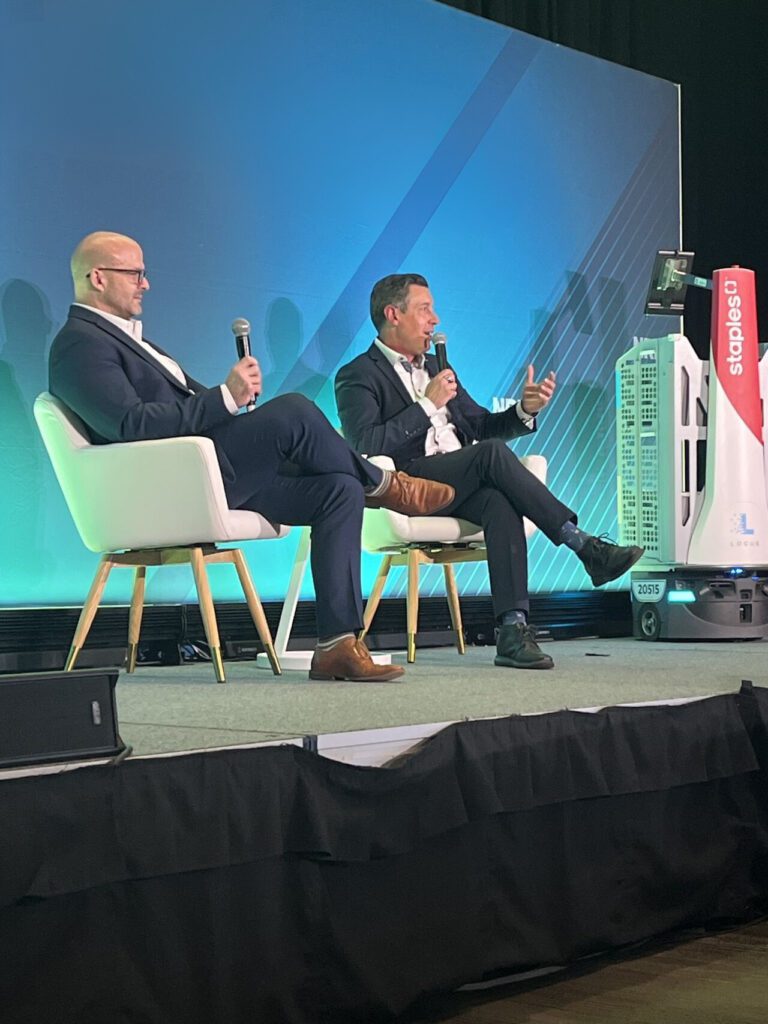
As Paul Giamberardino, Chief Supply Chain Officer, put it: “Bringing easy back doesn’t just apply to our customers — it applies to our employees too.”
In the end, human-centered automation is about giving people better tools to succeed.
Read the Staples Canada case study and view the case study video to learn more.


 Article