Live Event Series: See real-world automation in action.



Summary: As warehouse space becomes more expensive and customer expectations continue to rise, many facilities are turning to mezzanines and pick towers to maximize existing square footage. This article explains how autonomous mobile robots (AMRs) can help automate these elevated storage areas, improving efficiency, reducing errors, enhancing worker safety, and enabling scalable operations. By combining robotics with existing warehouse infrastructure, businesses can increase productivity, optimize space utilization, and better handle fluctuating order volumes without expanding their physical footprint.
Warehouse managers know that acquiring more real estate these days usually isn’t feasible with soaring rents, so they’re choosing to stay in their brownfield (current) facility. But with eCommerce orders remaining at an all-time high and customers demanding faster fulfillment times across all industries, you have to do more with the same space.
Is that doable? Yes, if you have expanded your facility with mezzanines and pick towers. These structures work well to increase your storage space, but you can also use them to amp up your productivity by automating them. Not all forms of automation work on mezzanines, but robots do it with ease. There are four top reasons why you should consider automating your mezzanines and pick towers with robots as your next move.
1. Improve Warehouse Efficiency with Mezzanines
 Mezzanines give you valuable square footage to augment your main warehouse floor, but these spaces often get used simply for low-value overflow storage. That’s just a waste when they’re prime space for even more picking density. By automating your mezzanine processes, you transform this bonus overhead real estate into another way to fulfill more orders.
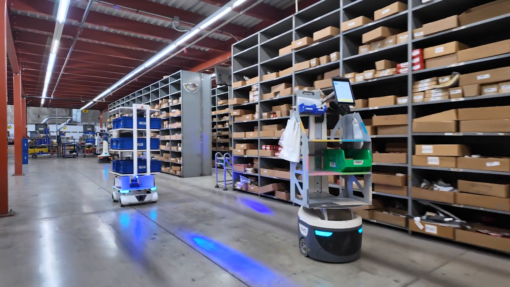
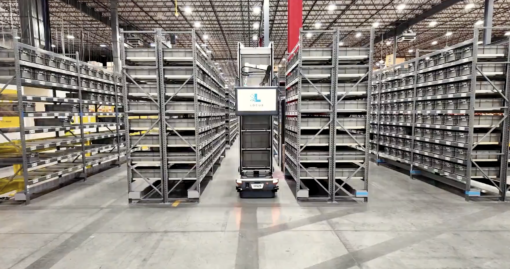
One type of warehouse automation that works well on mezzanines and pick towers are autonomous mobile robots (AMRs), which excel at navigating tight spaces and narrow aisles and transport goods to a pick-and-pass station. Once the items are at the station, they’ll be transported down to a new level for the next part of the task, be it adding more items to the order or getting the item to packing and shipping.
2. Reduce Errors and Bottlenecks
Another reason to automate your mezzanines — you’ll decrease the primary fulfillment headaches of order and inventory accuracy so you can say farewell to the Excedrin. Ensuring accurate inventory counts and accurate orders is tougher when working across multiple floors that aren’t automated. This is especially true if you’re just utilizing pen and paper to keep track, or your floors don’t “talk” to each other. Without automation, your associates have to manually move items between floors, which is time consuming and can lead to mistakes. Inaccurate inventory counts on any floor create downstream issues like short picks, which will frustrate customers.
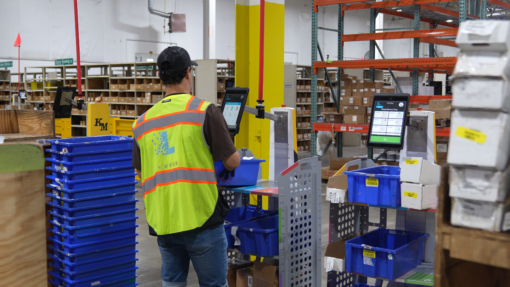
Warehouse automation and AMRs help you to bypass these issues with real-time scanning and inventory integration. They autonomously transport goods throughout each level of your warehouse while displaying the exact item and location (sometimes even with a picture) for your associates to pick the correct item. This digital chain of custody visibility reduces miscounts and inaccurate picks that create bottlenecks. AMRs also free your associates from tedious transport duties so they can handle more value-added tasks.
3. Lower Safety Risk
Using mezzanines poses inherent safety challenges as climbing stairs or lifts while carrying heavy loads raises injury risks for your associates. Automation through AMRs provides a safer alternative for mezzanine material transport, with the robots handling the heavy lifting and carrying. This leaves the non-injury-inducing picking tasks for human associates to take the risk out of working on elevated floors while carrying material.
4. Scale Your Operations with Ease
Warehouse mezzanines provide vital space to accommodate surge volumes driven by seasonal peaks, promotions, or social media-driven purchases. Automation in the form of AMRs combined with human associates provides the perfect way to scale your entire warehouse, including your mezzanine. With AMRs that are offered through a Robots-as-a-Service (RaaS) model, like at Locus Robotics, you can expand or contract your fleet dynamically based on order volumes and deploy more bots to handle peak seasons.
Embracing robotic warehouse automation is the fastest — and easiest — way to activate your mezzanine’s full potential. Want to learn more about how deploying flexible automation across your current or planned mezzanines helps you to maximize space, speed, safety, and savings? Let’s talk!
Frequently Asked Questions
1) What are warehouse mezzanines and pick towers?
Answer: Warehouse mezzanines and pick towers are elevated storage structures that increase usable warehouse space without expanding the building footprint.
2) How do autonomous mobile robots (AMRs) work on mezzanines?
Answer: AMRs navigate warehouse aisles and transport goods between picking locations, pick-and-pass stations, and other fulfillment areas, helping streamline multi-level operations.
3) What are the benefits of automating warehouse mezzanines?
Answer: Automating mezzanines can improve operational efficiency, increase order accuracy, reduce bottlenecks, enhance worker safety, and support business growth.
4) How do AMRs help reduce warehouse errors?
Answer: AMRs use real-time inventory tracking, scanning, and location guidance to ensure associates pick the correct items, reducing inventory discrepancies and order fulfillment mistakes.
5) Can warehouse robots improve workplace safety?
Answer: Yes. AMRs reduce the need for workers to carry heavy loads up and down stairs or lifts, lowering the risk of injuries associated with manual material transport.
6) How can automation help warehouses handle peak seasons?
Answer: Robotic automation allows warehouses to scale operations more efficiently by increasing robot deployment during high-demand periods and adjusting capacity as order volumes change.
7) What is Robots-as-a-Service (RaaS)?
Answer: RaaS is a subscription-based model that allows warehouses to deploy and scale robotic fleets without the large upfront investment typically associated with automation technologies.
 Article