For years, warehouse automation has been defined by size, with big enterprises seen as the only ones who could afford robotics, while smaller operations were told the technology wasn’t built for them. Then the perception shifted the other way as flexible, modular autonomous mobile robots (AMRs) entered the market, and automation became synonymous with the small and mid-sized warehouse.
Both ideas miss the point. Warehouse automation strategy is what determines success for warehouses big and small, instead of being exclusively about one warehouse size or another.
“For a long time, automation felt out of reach unless you were moving millions of units a week,” said Chris Caouette, Chief Revenue Officer at North Bay Distribution on an episode of the “Warehouse Automation Matters” podcast. “Now it’s table stakes, and the barrier isn’t size anymore, it’s mindset.”
Today, the same warehouse automation solution that helps a regional 3PL move 10 million orders a year can also help a global retailer ship 100,000 units a day across multiple mezzanine levels. Whether the operation spans 50,000 square feet or five million, robotics now fit wherever efficiency, labor agility, and data visibility matter most.
The Old Warehouse Automation Equation No Longer Applies
Not long ago, automation was a capital investment that was measured in years, not months. Fixed systems, complex installations, and long integration timelines kept smaller players on the sidelines.
That’s changed, as the shift to Robots-as-a-Service (RaaS) and AI-driven orchestration through LocusONE has rewritten the equation. Instead of massive upfront costs, warehouses can now deploy robots as an operating expense and scale usage as they grow.
For smaller facilities, that means access to enterprise-grade automation without the enterprise price tag. For the giants, it means freedom to scale dynamically across a distributed network without rebuilding from the ground up each time.
Myth #1: Robotics Are Only for the Giants
Large-scale retailers and manufacturers were early adopters of automation because they had the budget and the volume to justify it, and that history still shapes perception.
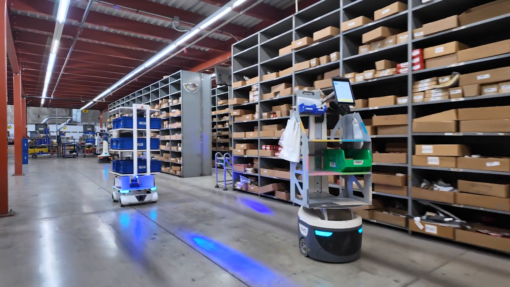
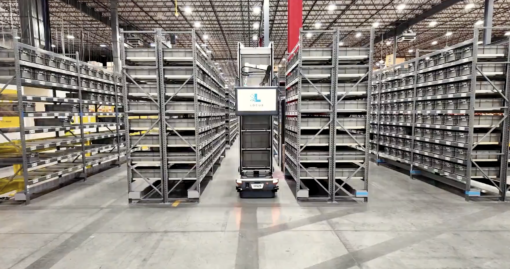
But modern autonomous mobile robot (AMR) fleets have changed what “scale” even means. With intelligent orchestration, robots don’t need to be tied to a single building or fixed infrastructure. They can move between zones, floors, and even facilities, all coordinated under one system.
“We’re moving more than 100,000 units a day across multi-level mezzanines,” noted Erik Pichette, Senior Manager of Optimization and Solution Design at Locus Robotics, on the “Warehouse Automation Matters” podcast. “It’s not about warehouse size — it’s about orchestrating flow at any scale.”
At global retailers, this allows hundreds of robots to operate 24/7, navigate mezzanines, and manage tens of thousands of picks per hour. In other words, the same flexibility once reserved for smaller operations now powers some of the world’s largest supply chains.
Myth #2: Robotics Are Only for the Small and Mid-Sized
On the other side of the spectrum, there’s a belief that robotics are better suited for smaller, more agile facilities that can adapt quickly to new workflows and ramp up seasonally.
That’s only partly true. Yes, flexible deployment is one of automation’s biggest strengths. But the misconception is thinking that flexibility stops being valuable once an operation reaches a certain scale.
“We didn’t start with hundreds of robots — we grew into automation,” explained Mert Selcuk, Director, Supply Chain Strategy & Solutions Design at Staples Canada on an episode of the “Warehouse Automation Matters” podcast. “That flexibility is what made it sustainable.”
In reality, large enterprises face the same volatility just at a higher volume. Labor shortages, peak season surges, and SKU proliferation don’t disappear with size. They multiply and the ability to reconfigure workflows in days rather than months becomes even more essential.
Truth: Flexibility Scales Both Ways
The real story of robotics today isn’t about who uses them; it’s about how they’re used.
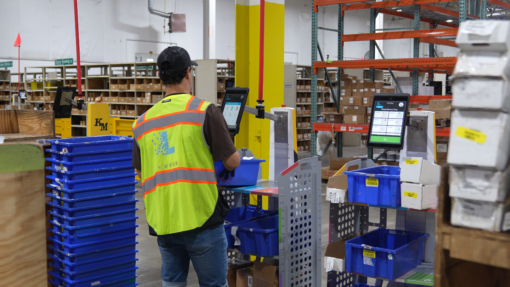
For smaller operations, warehouse automation levels the playing field, enabling the kind of throughput and accuracy that once required massive infrastructure. For global enterprises, it delivers the agility to pivot across markets, balance labor, and optimize fulfillment at scale.
“At peak, our network can flex robot counts and workflows in real time,” said Bryan Corbett, VP of Sales and Marketing at Barrett Distribution Centers on an episode of the “Warehouse Automation Matters” podcast. “That’s something you couldn’t imagine a few years ago.”
“Whether we add one customer or ten, the system adapts faster than our volume changes,” stated Adam Lawicki, VP of Strategy at scale3PL on an episode of “Warehouse Automation Matters”.
At one end, a mid-sized 3PL can use a few dozen robots to double productivity and hit its first 10-million-pick milestone. At the other end, a multinational retailer can orchestrate thousands of Locus Robotics’ robots across multi-level facilities and around-the-clock shifts.
The same technology can be used at different scales with the shared outcome being continuous improvement.
Where the Industry Goes from Here
The warehouse size and automation conversation is giving way to something more meaningful in warehouse capability.
As data becomes the new driver of warehouse decision-making, automation isn’t defined by square footage or workforce count. It’s defined by fit in how well it adapts to evolving demand, integrates with existing systems, and scales up or down without disruption.
That’s why robotics have become a cornerstone of both enterprise and regional fulfillment strategies. The industry leaders — regardless of their size — are those that treat warehouse automation not as a one-time project, but as a living system that grows smarter with every order.
Final Takeaway
Warehouse automation has moved past the question of “who it’s for.” The answer is simple that it’s for everyone ready to work smarter, move faster, and stay ahead of change.
As Kait Peterson, the VP and Head of Marketing at Locus Robotics, often says, “Warehouse automation isn’t about how big you are — it’s about how ready you are to move when the market shifts.”
Whether your operation spans a single facility or a global network, robotics now deliver something far more important than scale — they deliver sustained adaptability.
Listen to the latest episodes of Warehouse Automation Matters to hear how leaders from both large and mid-sized operations are using automation to redefine what’s possible on the warehouse floor.
Ready to scale smarter? Contact Locus Robotics to explore how AMRs and LocusONE™ can transform your operation.


 Article