Warehouse automation entered 2025 at full momentum, and the people leading it turned a year of constant change into a year of progress. Across industries, fulfillment leaders navigated volatile demand, evolving labor dynamics, and rising customer expectations with remarkable agility. What emerged was a clearer understanding of how automation improves operational confidence and truly drives performance through data, orchestration, and collaboration between people and intelligent systems.
From third-party logistics providers (3PLs) and retailers to healthcare and manufacturing operations, leaders shared a common focus of designing fulfillment that can adapt in real time. Through dozens of conversations on the “Warehouse Automation Matters” podcast, warehousing executives revealed how Locus Robotics helped them scale smarter, work safer, and deliver faster.
At Locus Robotics, we saw 2025 redefine fulfillment. Here’s what the leaders who partnered with us taught the industry.
“Ever-Peak” Became the New Operating Model
The traditional peak season is gone, as scale3PL’s Adam Lawicki described on an episode of “Warehouse Automation Matters” how e-commerce volume has become a continuous surge:
“July for us now looks like November. Every month feels like peak.”
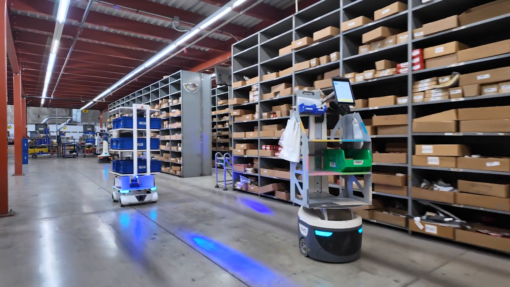
To handle this nonstop demand, scale3PL relies on Locus Robotics autonomous mobile robots (AMRs), which Lawicki says operate “faster than the average pace of a human jogging.” By automating standard workflows, his team keeps throughput high without burning out associates and frees them to focus on complex orders and customer-specific requirements.
Lesson Learned: Design fulfillment operations to sustain peak-level performance every day. Automate what’s repeatable so people can focus where they add the most value.
Flexibility Became the Defining KPI
In 2025, flexibility mattered more than any single performance metric. Conectiv’s Kevin Sullivan traced that philosophy back to his company’s roots in Technicolor’s media logistics operation, stating on an episode of “Warehouse Automation Matters”:
“Flexibility was just inherent in everything we did. It’s in our DNA.”
That same mindset now drives how Conectiv uses Locus Robotics AMRs to manage dynamic product mixes from retail merchandise to regulated medical goods. The automation adapts instantly to shifting SKU volumes and client requirements to give the company the agility to move between industries without missing a beat.
Lesson Learned: Flexibility is a capability, so build systems and partnerships that can pivot as fast as customer demand.
Adoption Outpaced Ambition
Ambitious automation goals were everywhere in 2025, but adoption determined which ones succeeded. Made4Net’s Amit Levy underscored this point on an episode of “Warehouse Automation Matters”:
“If you want to know whether automation is working, don’t look at the system — look at the people using it.”
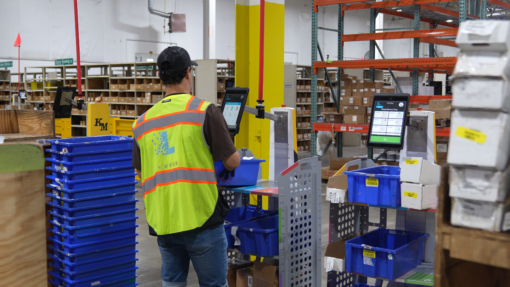
Ease of use has become an adoption accelerant for warehouse automation. Motivational Fulfillment’s CEO Tony Altman shared on an episode of “Warehouse Automation Matters” that his teams can train a new employee to work with Locus Robotics AMRs “in 10 minutes or less.” That simplicity turned initial skepticism into confidence, and confidence into measurable results.
Lesson Learned: Adoption is the real ROI. Choose warehouse automation solutions that empower your people, not just your metrics.
Visibility Turned Data into Drive
KSP Fulfillment celebrated its 10 millionth robotic pick this year powered by Locus Robotics. But as VP of IT Mike Geiger explained on an episode of “Warehouse Automation Matters”, the milestone wasn’t just about volume.
“People take pride in seeing their impact. The technology helps, but the mindset shift keeps performance consistent.”
By giving associates visibility into their performance data, KSP transformed metrics into motivation. Error rates dropped, engagement rose, and throughput increased, all fueled by transparency.
Lesson Learned: Visibility builds accountability. When data becomes shared knowledge, it becomes a driver of pride and productivity.
Standardization Accelerated Scale
For Radial, growth in 2025 was built on repeatable success. VP of Fulfillment Services Delivery David Welsh described on an episode of “Warehouse Automation Matters” how Locus Robotics has become a core part of Radial’s standardized fulfillment model:
“Project managers on our side, on the tech side, and then on the Locus Robotics’ side are all working in concert throughout each implementation.”
That consistency has allowed Radial to launch new sites 30% faster than before, using lessons from each rollout to refine the next. Accuracy improved alongside speed and proved that standardization doesn’t have to sacrifice quality.
Lesson Learned: Scale doesn’t come from doing more. It comes from doing the right things consistently.
Orchestration Connected Everything
In 2025, warehouse orchestration moved from concept to cornerstone. With LocusONE™ as the industry’s first multi-site orchestration platform, warehouses gained the ability to manage people, robots, and workflows across entire networks in real time.
For Radial and others, warehouse orchestration meant that labor, capacity, and demand were no longer isolated. Supervisors could see across every zone and every site, dynamically reallocating resources where they were needed most to achieve both speed and balance.
Lesson Learned: Warehouse orchestration is the backbone of flexible fulfillment as it turns site-level optimization into network-level intelligence.
Data Became the New Design Tool
Every warehouse automation conversation in 2025 circled back to data-driven design and Conectiv’s Kevin Sullivan put it bluntly:
“Having a highly defined onboarding process is key to success. It’s about designing around the data before you design the warehouse.”
That data-first mindset is now guiding everything from layout planning to robot deployment. By modeling order patterns, SKU velocity, and travel paths before implementation, warehouse leaders are eliminating inefficiencies before they start.
Lesson Learned: Let data lead design. The smartest layouts begin on the analytics dashboard, not the blueprint.
Culture Still Won
Technology evolved rapidly this year, but culture determined which organizations evolved with it. Barrett Distribution’s Bryan Corbett framed it simply on an episode of “Warehouse Automation Matters”:
“People drive change, people make things successful. You have to have the right systems in place, but you gotta have the best people.”
That culture of ownership and trust made the difference between teams that resisted automation and those that leveraged it fully. Across every successful deployment, leadership invested in communication, training, and shared purpose alongside the technology itself.
Lesson Learned: Culture sustains warehouse automation, so invest in people as intentionally as you invest in technology.
Reverse Logistics Became a Growth Engine
Returns processing, once an afterthought, became a defining challenge in 2025. Conectiv used Locus Robotics’ warehouse automation to handle high-volume, high variability returns for e-commerce and retail clients.
“In retail returns, volume is consistent and predictable, but in e-commerce, it’s not, so we’re building smarter automation around the unpredictable,” Sullivan explained.
By reimagining reverse logistics with flexible AMRs, Conectiv turned an operational burden into a service differentiator to improve both margin and customer retention.
Lesson Learned: Reverse logistics deserves innovation, not improvisation. Automating the inbound side unlocks new efficiency and value.
Continuous Improvement Never Stopped
Every company interviewed in 2025 described automation as a living system, not a fixed deployment.
At Motivational Fulfillment, Tony Altman’s team uses Locus Robotics’ data daily to identify refinements from optimizing routes to improving ergonomics. At scale3PL, Adam Lawicki calls it “turning exceptions into exceptional experiences.”
“Automate the standard. Elevate the exceptions,” Lawicki said. “That’s how we scale without burning our teams or upsetting our clients.”
Lesson Learned: Progress isn’t a milestone — it’s a mindset, and the most advanced operations evolve faster than the challenges around them.
Warehouse Automation in 2026 and Beyond
The story of warehouse automation in 2025 was one of convergence with people, robots, and data working together in rhythm. From 3PLs and retail networks to healthcare fulfillment, Locus Robotics powered a shift toward adaptable, orchestrated, and human-centered automation.
The year’s most important lesson was that success comes from designing systems that learn, scale, and improve continuously because in fulfillment, the only constant is change.
As 2026 begins, leaders aren’t just planning for peak season — they’re preparing for every day to feel like peak, supported by automation that’s flexible, intelligent, and built to grow with operational confidence.
Listen to the full episodes of Warehouse Automation Matters for more insights from the people building the future of fulfillment, powered by Locus Robotics.
Discover how Locus Robotics can help you prepare for an ‘Ever-Peak’ future — explore LocusONE™ and our AMR portfolio today.


 Article