When you think about innovation in warehouse automation, your mind probably goes straight to tech-native 3PLs or digitally born retailers. But sometimes, the most compelling operational transformations come from companies with deep roots and long memories.
That’s the case for Conectiv, which is a company whose origins stretch back more than a century to the Technicolor era of Hollywood. Today, it’s running fulfillment operations for everything from vinyl box sets to medical devices and rethinking what is possible for flexibility with autonomous mobile robots (AMRs) in a world driven by automation and customer expectations.
“We were formerly known as Technicolor,” said Kevin Sullivan, COO of Conectiv recently on the “Warehouse Automation Matters” podcast. “Our legacy actually goes back 100 plus years and primarily focused on the world of media and entertainment.” That legacy didn’t become a limitation for Conectiv. Instead, it became a framework for reinvention. “Flexibility was just inherent in everything that we did,” Sullivan said. “That’s how we operate. That’s what we do.”
And that flexibility is now the core of Conectiv’s approach to warehouse automation and 3PL operations.
The DNA of Warehouse Fulfillment Flexibility
Many 3PLs talk about customization, but Conectiv lives it, sometimes in ways that make automation complex. The company’s media heritage required rapid, large-scale execution on tight deadlines, from new movie releases to box set launches spanning thousands of stores, and that legacy shaped how Conectiv handles high-variance workflows today.
“When you're supplying big box retail stores, there's a lot of focus on multi-SKU rapid replenishment,” Sullivan said. “You may have to send a package that may contain 15 to 20 different SKUs, and that may need to go out to say 4,000 different Walmart locations.”
For those environments, warehouse automation can include “high speed unit sortation systems.” But in their eCommerce and regulated product business, the priorities shift to “batch control and tracking a product, which is really more on the process and software side as opposed to the hardware automation side of things.”
That nuanced approach of warehouse automation where it creates leverage and process discipline where variability demands it is a lesson for every warehouse leader expanding into new verticals.
Customization vs. Scalability: The Real Balancing Act
Every customer wants tailored workflows, and every warehouse operator needs repeatability, so where do those priorities meet?
“You can’t be 100% customized for every single customer,” Sullivan said. “That’s just not efficient. That’s just not realistic. So, we have to find the balance.”
Their approach begins with sales and onboarding and not with equipment selection. Discovery questionnaires, SKU profiles, packaging requirements, and projected volumes help the Conectiv team understand whether a client aligns with existing automation assets or calls for new investment.
“Smaller, medium sized customers, we will tend to try to make sure that we develop a solution that leverages existing infrastructure,” Sullivan said. “If it’s a larger scale opportunity where it makes sense… then we will take that into account.”
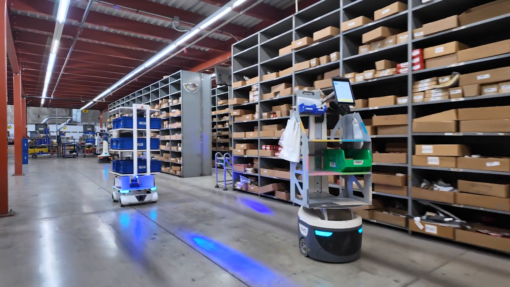
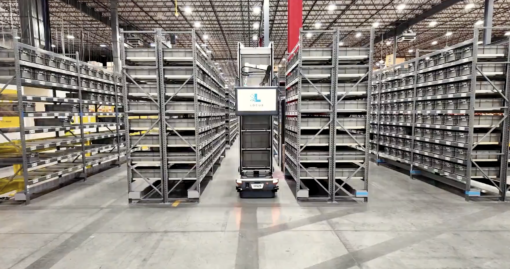
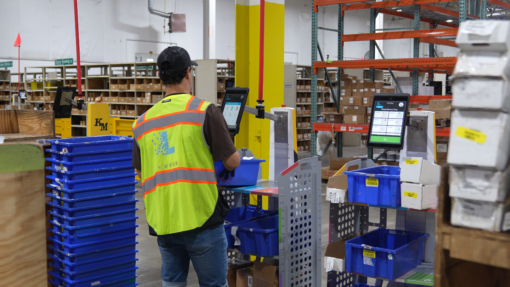
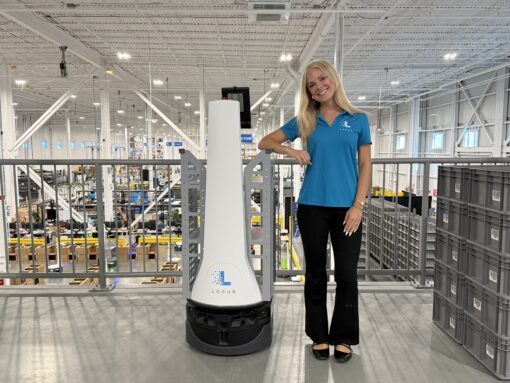
That’s where Locus Robotics’ autonomous mobile robots (AMRs) enter the picture as a modular automation layer that allows Conectiv to add capacity without rethinking entire workflows. AMRs help them scale up for eCommerce, reverse logistics, and variable-order environments while maintaining control over labor, data visibility, and replenishment with Locus Origin for each-picking, Locus Vector for case-picking, and LocusONE for fleet orchestration.
Packaging, Kitting, and the Realities of Automation
Packaging automation is often discussed as a one-size-fits-all evolution, and Conectiv’s experience makes it clear that one size is a myth. AMRs can and do support non-standard workflows, even when packaging automation isn’t feasible.
“In our legacy media business, which is the DVD business, you have a relatively standardized form factor. And so, we are heavily automated around that,” Sullivan said. “But you may have collector’s edition sets, which is a very different animal to tackle, and you’re not going to really be able to automate that.”
Their solution is to deploy automation where it works and build disciplined manual processes where it doesn’t. That kind of honesty is rare in automation conversations, but essential to designing systems that actually succeed.
Reverse Logistics as a Core Competency
Returns can make or break a fulfillment operation, especially for complex product mixes, but for Conectiv, return flows aren’t an afterthought.
“It really is at the heart of how we operate and what makes us special,” Sullivan said. Their DVD return business includes “a very significant amount of automation” to support consistent return volumes.
As eCommerce becomes a bigger part of the business, the challenge shifts again with unpredictable flows, one-off returns, and more hands-on processing. “We continue to explore opportunities of how we can do that more efficiently, more automated,” Sullivan said. “But that's definitely a path we’re walking down currently.”
The Next Wave: Proven Tech First, Emerging Tech Second
The team is actively evaluating emerging tools, including AI, but isn’t chasing novelty for novelty’s sake.
“Right now, our primary focus is really going to be expanding some of the existing proven technologies that we've deployed,” Sullivan said. That means more AMRs and expanded use of ASRS systems, supported by deeper inventory management capabilities.
There’s an important lesson here that innovation isn’t defined by how many new platforms you adopt, but by how effectively you scale what already works.
Where Do We Go from Here?
On the podcast, Sullivan closed with advice for warehouse leaders evaluating 3PLs: Don’t just believe the pitch — verify the capability.
“You really need to be 100% confident that your partner can actually deliver on what they say they’re gonna do,” he said. “It’s eyes on their facilities, talking to customers, and really doing your homework.”
As automation becomes more powerful, and more accessible, the real edge will belong to 3PLs that can combine experience with adaptability, and technology with execution.
And sometimes, the best examples start with film reels and proven robotics solutions.
Listen to the full episode of the “Warehouse Automation Matters” podcast featuring Kevin Sullivan.


 Article