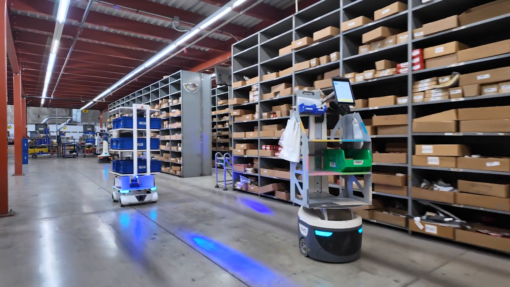
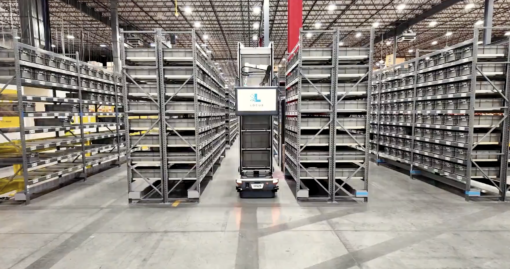
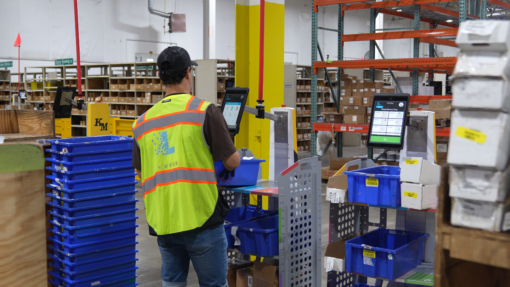
When Locus Robotics customers collectively reached six billion robot-assisted picks, it represented far more than a milestone in automation. It showed how quickly fulfillment operations are evolving through collaboration between people and technology. As I shared in my recent conversation with Tony Moore on his “Picking a Winner” podcast, we’re entering one of the most dynamic periods in logistics, where innovation on the warehouse floor is changing how the world moves goods.
Scaling Warehouse Automation at the Speed of Innovation
When I joined Locus Robotics in 2021, the company had just celebrated 500 million picks. Today, only a few short years later, that number has grown more than tenfold. We’ve now surpassed six billion robotic-assisted picks, and we’re climbing fast.
That kind of exponential scale speaks not only to customer demand but to what flexible, collaborative warehouse automation can achieve when it’s built for real-world operations. As I told Moore, “Our robots are collaborative. They’re designed to work alongside people — not replace them.” The result is a model of efficiency that’s both human-centric and endlessly scalable.
The progress isn’t slowing down. With the next-generation Locus Array autonomous robot now entering customer pilots, we’re seeing even greater momentum toward robots that pick, transport, and adapt dynamically across fulfillment workflows. These advances represent what’s next in warehouse innovation with fully autonomous systems that support people in doing their best work.
People First, Technology Second
The biggest misconception about robotics is that it’s all about machines. In reality, warehouse automation is a people story.
Workers who once pushed heavy carts across hot warehouses now spend their shifts focusing on tasks that require skill and precision, rather than repetitive movement. “There’s a real quality-of-life change,” I explained. “People go home with more energy for their families because they’re not exhausted from the physical strain of the job.”
But there’s another layer to it, which is a cultural one. When a company invests in automation, employees notice as they see leadership paying attention to the floor, investing in safety, and signaling that their contribution matters. That sense of being seen can transform morale as much as the technology itself.
“You can feel the energy shift,” I told Moore. “When companies modernize, the people doing the work feel valued. They recognize that innovation isn’t happening around them — it’s happening with them.”
RaaS and the Power of Warehouse Automation Flexibility
The conversation also touched on one of the biggest differentiators in the Locus Robotics model, which is Robotics-as-a-Service (RaaS).
Traditional automation required heavy capital investment, but Locus Robotics flipped that script by offering automation as an operating expense that is scalable, flexible, and fast to deploy. “We’re a RaaS company,” I said on the show. “Our founders came from warehousing so they understood that capital constraints shouldn’t hold back innovation.”
This model enables warehouses to scale up during peak periods and scale down afterward — much like a staffing model. Instead of overbuilding infrastructure, customers can right-size their operations in real time. The ability to deploy, adapt, and reallocate robots quickly with LocusONE™ has become a defining advantage in a world where peak season never really ends.
Beyond the Holidays
Peak is no longer confined to the holidays. From limited-edition product drops to influencer campaigns, order surges now happen year-round, and that volatility makes fulfillment agility essential.
“Fixed automation can’t keep up with constant fluctuation,” I explained. “A dynamic, mobile system can.” By combining engineering insights, data modeling, and scalable deployments, Locus Robotics customers achieve throughput and reliability that manual or rigid systems can’t match.
And it’s not just the global brands leading the charge. “We’re seeing mid-size companies stepping up,” I said. “They’re realizing it’s time to automate and that flexible models make it possible.”
Whether it’s a 3PL handling hundreds of SKUs or a retailer expanding into e-commerce, the same question now drives every decision of how can we meet demand with precision, not just power?
Building the Warehouse of Tomorrow
The future of warehouse automation is about connection between systems, partners, and people, and no single provider can solve every challenge alone. The real breakthroughs come from collaboration across robotics, AI, and integration with WMS and ERP systems.
“At Locus Robotics, we’ve built a fully autonomous platform,” I told Tony. “But we also partner with robotic arm companies and other innovators to deliver best-in-class solutions.” This kind of interoperability ensures that automation evolves as seamlessly as the supply chains it serves.
That spirit of collaboration will define the next decade of logistics. Just as automakers built industries by combining specialized expertise, warehouse automation leaders are building ecosystems that deliver resilience, intelligence, and speed at scale.
Looking Ahead
As we look to the future, we’ll continue to see robots that do more — picking, sorting, transporting, and optimizing — while humans focus on the decisions and relationships that move operations forward.
The role of technology will keep expanding, but its purpose remains the same in helping people work smarter. “The human advantage is flexibility,” I said near the close of our conversation. “We’re not always the fastest or strongest, but we adapt and that’s what drives progress.”
Warehouse automation is redefining the workplace. And that’s something worth celebrating — six billion times over.
Listen to the full episode of “Picking a Winner” featuring Sean Pineau and Tony Moore.
Author Bio:
Sean Pineau is a recognized leader in warehouse automation and fulfillment technology, serving as Vice President of Sales at Locus Robotics. With over 15 years of experience in robotics, logistics, and sales strategy, Pineau brings a clear, customer-centric vision for how scalable, intelligent automation can transform modern supply chains. He partners with companies of all sizes — from regional operators to global enterprises — to design and deliver flexible automation solutions that solve real operational challenges and drive measurable ROI. Known for his consultative, results-driven approach, Pineau is a trusted advisor to logistics leaders navigating an increasingly dynamic and complex fulfillment landscape. A passionate team builder, Pineau leads with a culture of accountability, collaboration, and innovation, empowering high-performing sales teams and advancing Locus Robotics’ long-term customer success.


 Article