
For most fulfillment leaders, the concept of “peak season” has lost all meaning as there’s no longer a start date to prepare for or a finish line to recover from. Volume spikes now come from every direction including influencer drops, limited-edition collaborations, and endless online promotions to create a continuous state of demand that never fully subsides.
In this new reality, fulfillment centers are expected to operate at peak performance all the time. And for third-party logistics providers (3PLs), the question is now how to sustain speed, accuracy, and profitability when every week feels like peak instead of how to manage a surge.
During his appearance on an episode of the “Warehouse Automation Matters” podcast, Adam Lawicki, VP of Strategy at scale3PL, described this shift as Ever-Peak, which is a state where promotions and high-volume events happen year-round instead of just before the holidays or back-to-school. “July now looks like November,” he said. “If you’re not automating, you’re going to be left behind.”
The New Reality of Continuous Demand and Ever-Peak
E-commerce volume keeps climbing, with 22 to 23 billion packages shipped annually in the U.S., according to Pitney Bowes, and no signs of slowing. For 3PLs, the old model of scaling labor seasonally is no longer viable. Capacity, precision, and flexibility are now daily imperatives, and manual processes simply can’t keep pace.
At scale3PL, Lawicki and his team recognized that the greatest risk was too little adaptability. “We wanted to automate what we’d call the standard work, the table stakes (or minimum requirements),” he explained. “Every order should ship on time, at the lowest possible cost, so our people can focus on the exceptions.”
This wasn’t just a philosophical choice. It was a strategic one. By automating routine fulfillment steps of picking, packing, rate shopping, and validation, scale3PL created a system that performs consistently, scales seamlessly, and empowers employees to focus on problem-solving instead of firefighting.
Automating What’s Standard to Elevate What Isn’t
Automation at scale3PL starts where predictability lives with robotics handling the repetitive, rule-based work, so associates can devote their energy to what requires human context and care like late orders, special requests, or customers with unique needs.
“Automation handles what should happen automatically,” Lawicki said. “That lets our team focus on what shouldn’t — those rare situations where human judgment makes all the difference.”
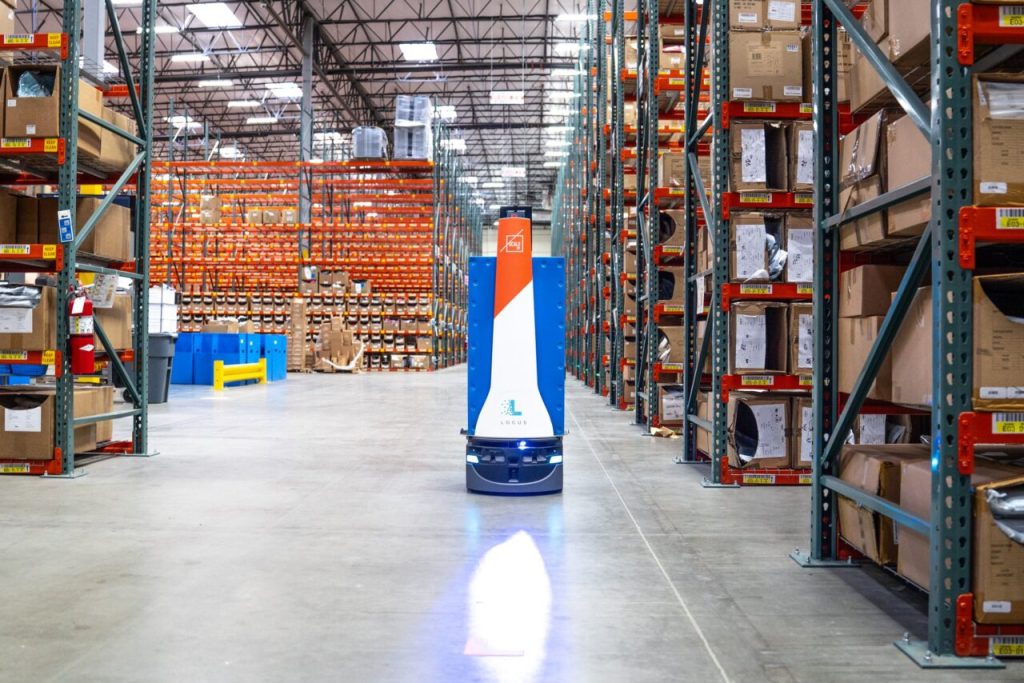
Behind the scenes, that orchestration relies on a carefully built ecosystem of partners. Lawicki’s team integrates technologies like Locus Robotics, Tension Packaging and Automation, and Deposco WMS to ensure each order moves with speed and accuracy from induction to final sortation. Every package is weighed, dimensioned, scanned, and verified automatically to cut waste and shipping costs while improving visibility for customers.
This orchestration results in orders that are packed more precisely, delivered more economically, and resolved more quickly when exceptions arise. Customer service inquiries have dropped, margins have improved, and the overall experience for brands and consumers alike has strengthened.
“Exceptions aren’t fires anymore,” Lawicki said. “They’re chances to win additional loyalty and trust.”
The New 3PL Mindset
Ever-Peak has ushered in a new philosophy of fulfillment leadership where success is no longer about adding more people or square footage — it’s about orchestrating intelligently.
“Manual wins on day one,” Lawicki noted, “but it loses by day ten.” The operations that endure are those with systems that flex hourly, every single day, and not those that refuse to change their operations based on the needs of their warehouse.
For many 3PLs, that means rethinking not just how they automate, but why they automate. Instead of chasing productivity as a single KPI, leading fulfillment partners are measuring adaptability in their ability to shift workflows, reroute labor, and maintain accuracy under pressure.
At scale3PL, that adaptability is both cultural and operational. “Our technology is intuitive,” Lawicki shared. “It takes about one to five minutes to train a new user. If our team has less friction, they can focus on exceptions and that’s where value is created.”
A Model for Sustainable Scale
What makes scale3PL’s approach so effective is its clarity of focus. The team doesn’t automate for the sake of modernization; they automate to protect people, performance, and partnerships.
“We started with one question,” Lawicki said. “‘What does our client need and expect?’ Everything else follows from that.”
By designing automation around the customer experience, and not the technology, scale3PL has turned speed and precision into differentiators. Packages arrive intact. Orders move faster. Costs go down. And teams spend less time reacting and more time improving.
That’s what sustainable scaling looks like in the era of Ever-Peak with an operation built not just for more volume, but for better outcomes.
The future of fulfillment won’t be defined by how companies handle peak — it will be defined by how they sustain excellence when there’s no off-season left.
In this new environment, automation isn’t a luxury. It’s the foundation for resilience, consistency, and customer loyalty.